
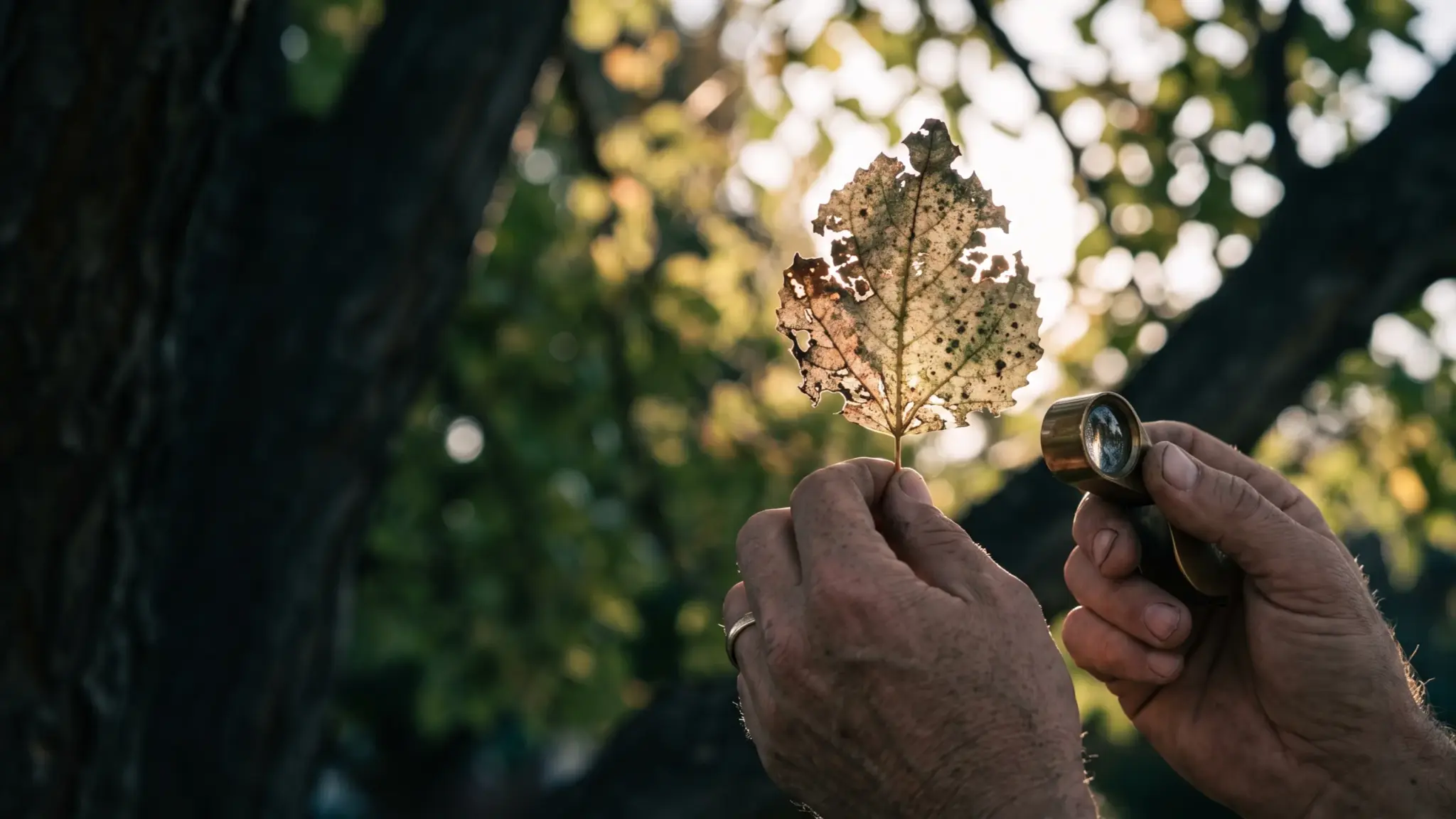
What’s wrong with my tree?
Every photo here was taken on a real job somewhere in the Salt Lake valley. If something on your tree looks like one of these, you’re in the right place, and now you know what to call it.
Insects and the damage they leave
Insects give themselves away in three ways: they chew the leaves, they drink the sap, or they tunnel through the wood. The third group is the one to worry about, because by the time you can see the damage the insect has usually been in there a while. Correct identification comes first. The treatment for a leaf-chewer is useless against a borer.
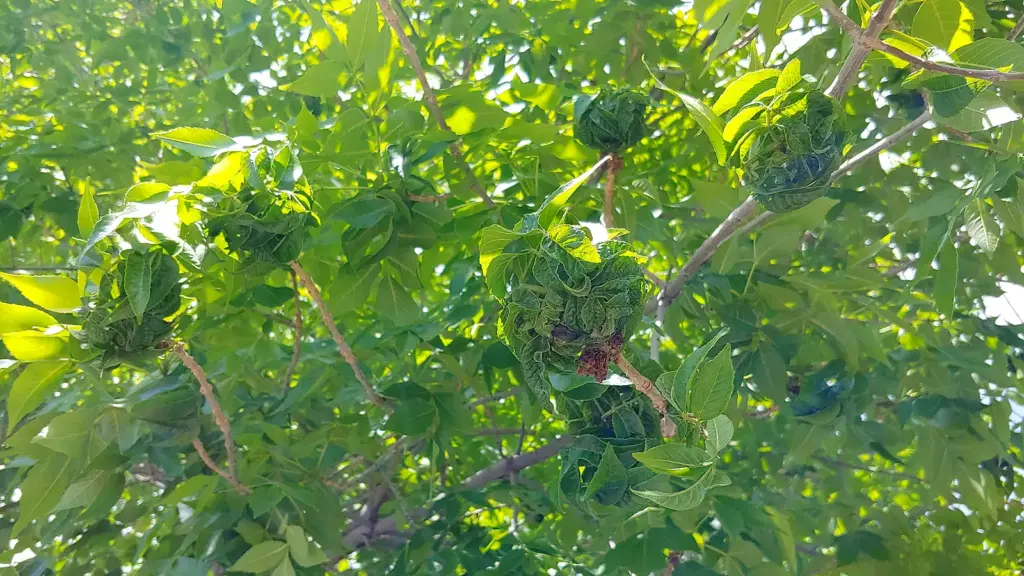
Aphids on ash. The sticky film underneath is honeydew, and it’s what gets on your car.
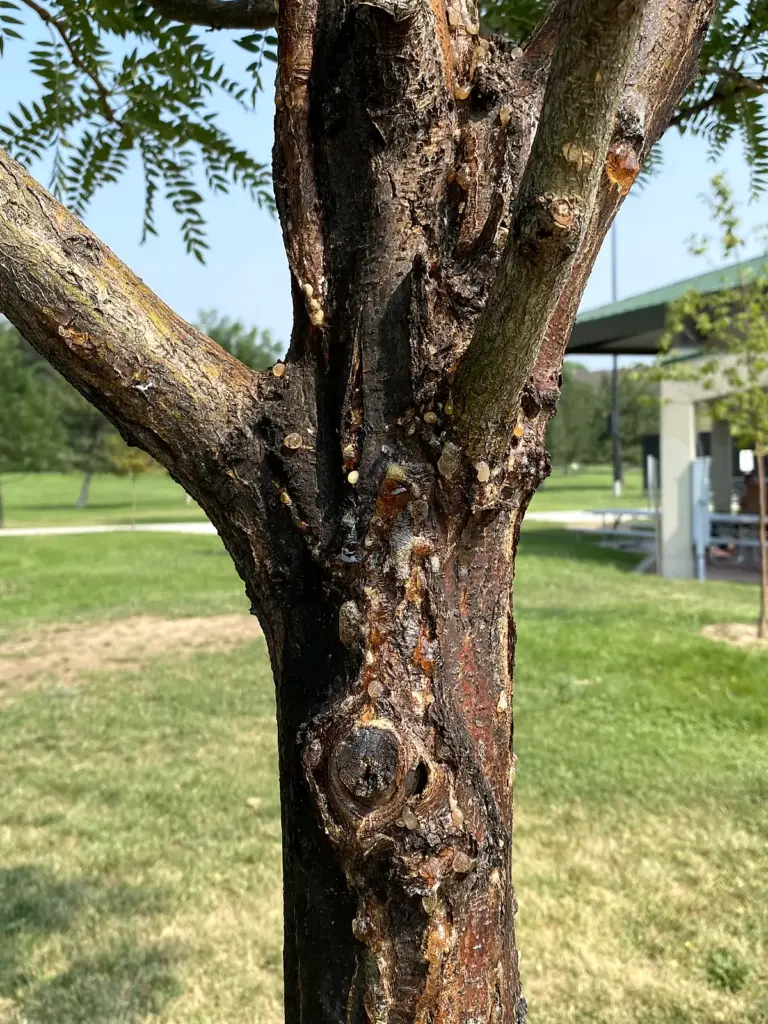
Borer damage in a honey locust trunk.
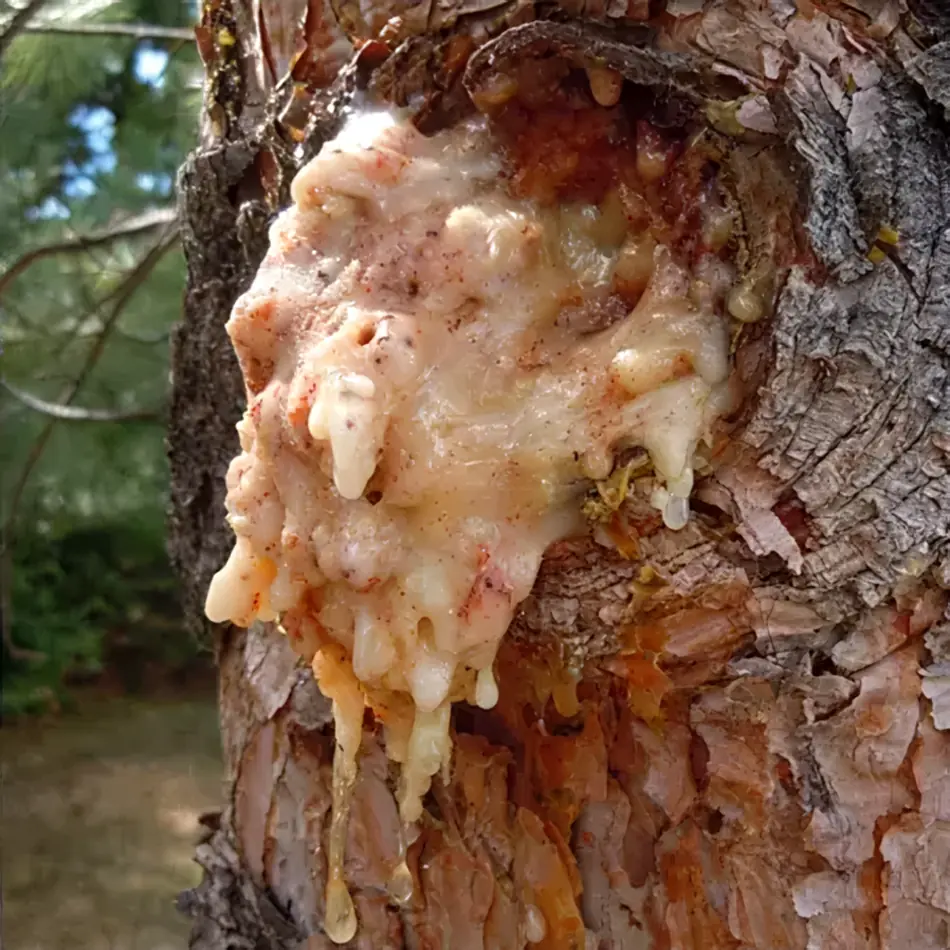
Pitch moth on pine. The blob of resin is the tree trying to push the insect back out.

Turpentine beetle. Pitch tubes on the lower trunk are the calling card.
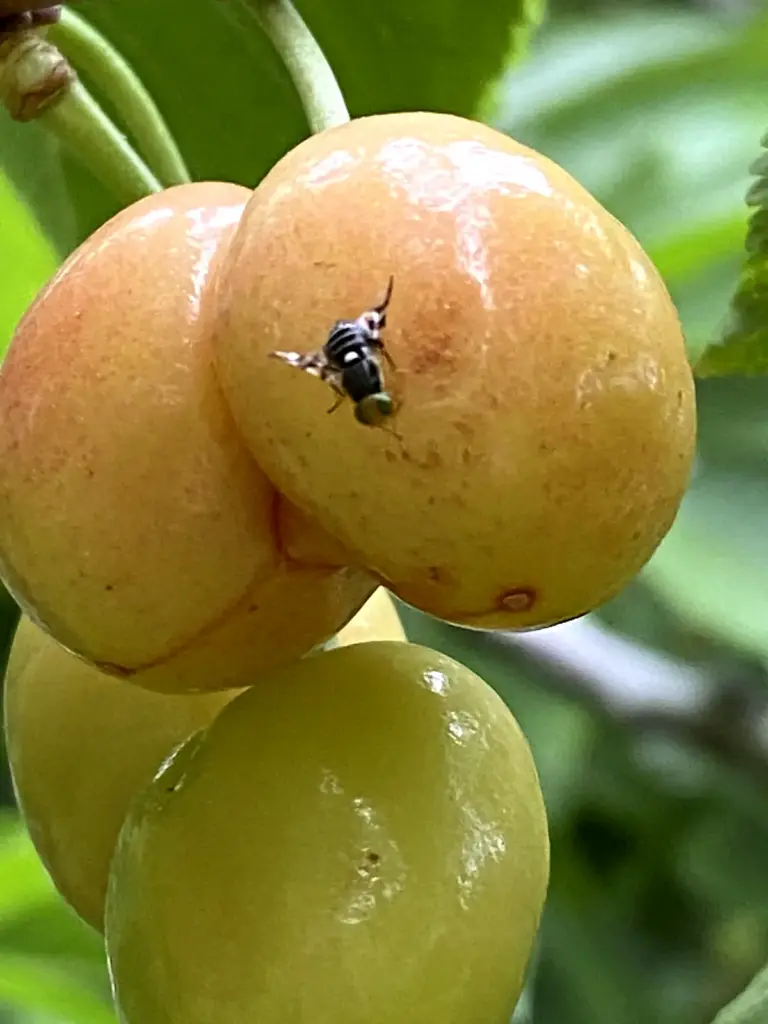
Western cherry fruit fly, the reason for wormy cherries.
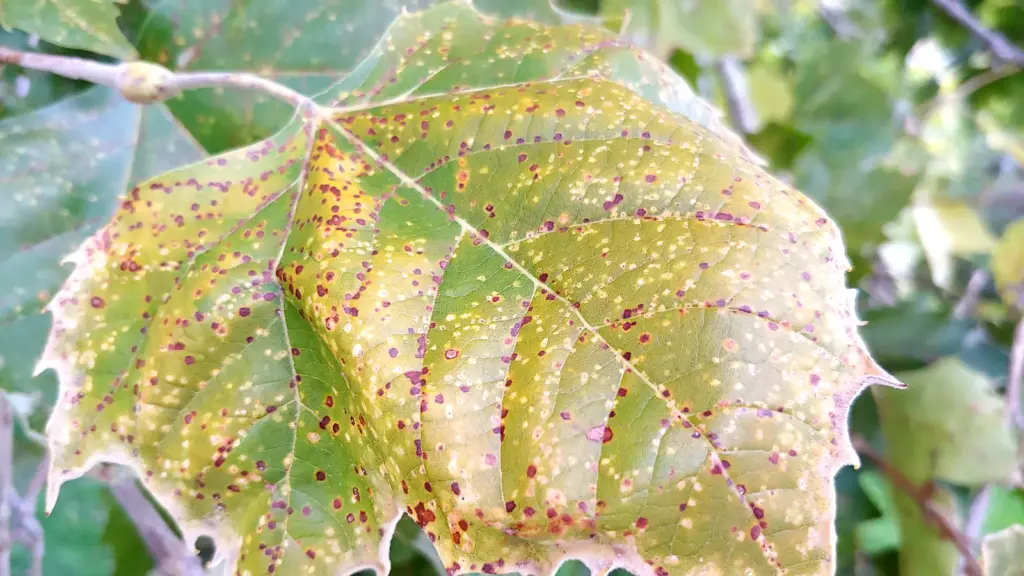
Scale on sycamore. Easy to mistake for part of the bark, which is exactly the point.
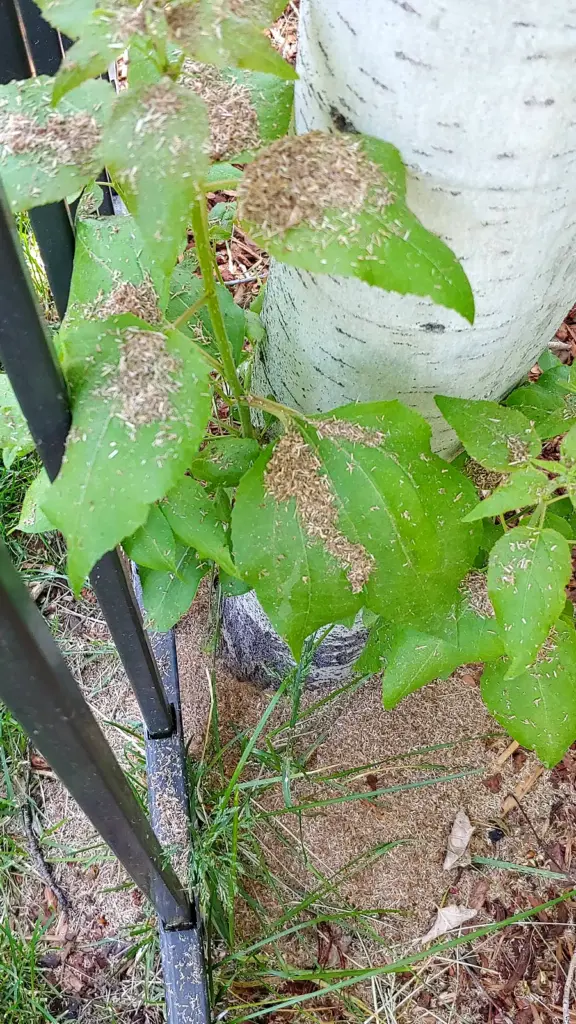
Sawdust at the base of a trunk. Something’s tunneling above it.
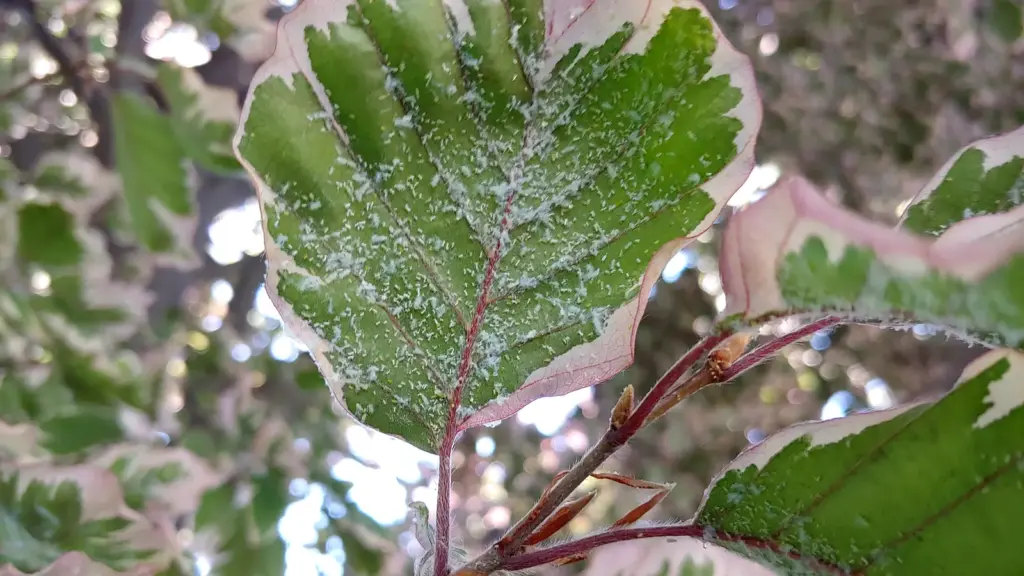
Woolly adelgid on beech. The white fluff is wax, not mold.
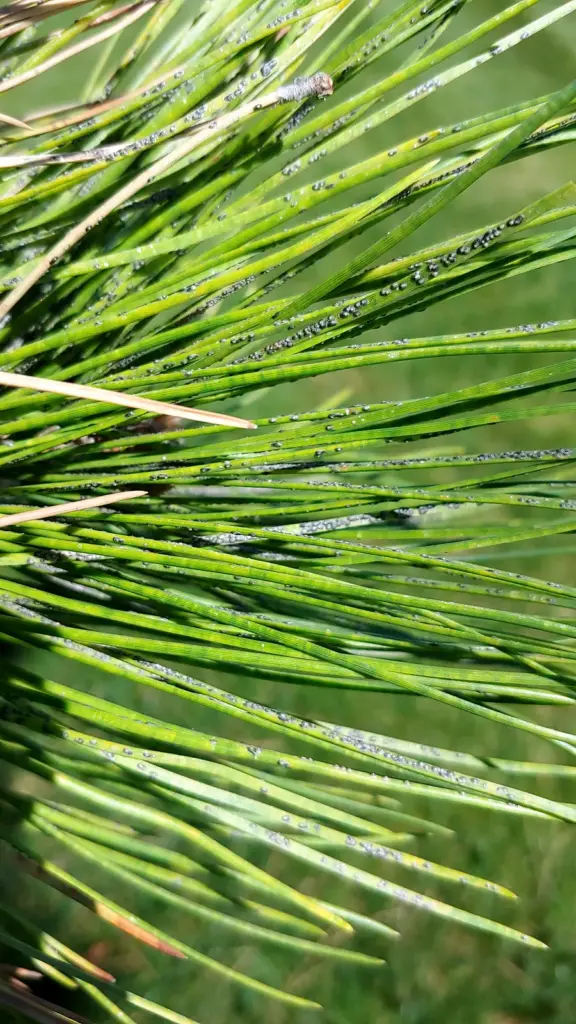
Pine scale, clustered along the needles.
Woolly aphids on oak.
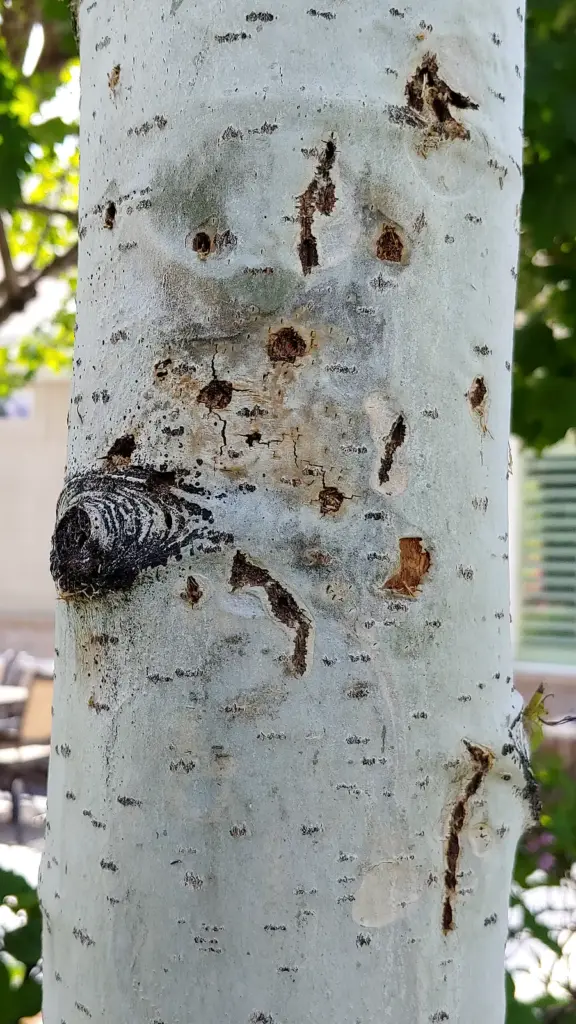
Borers in aspen.
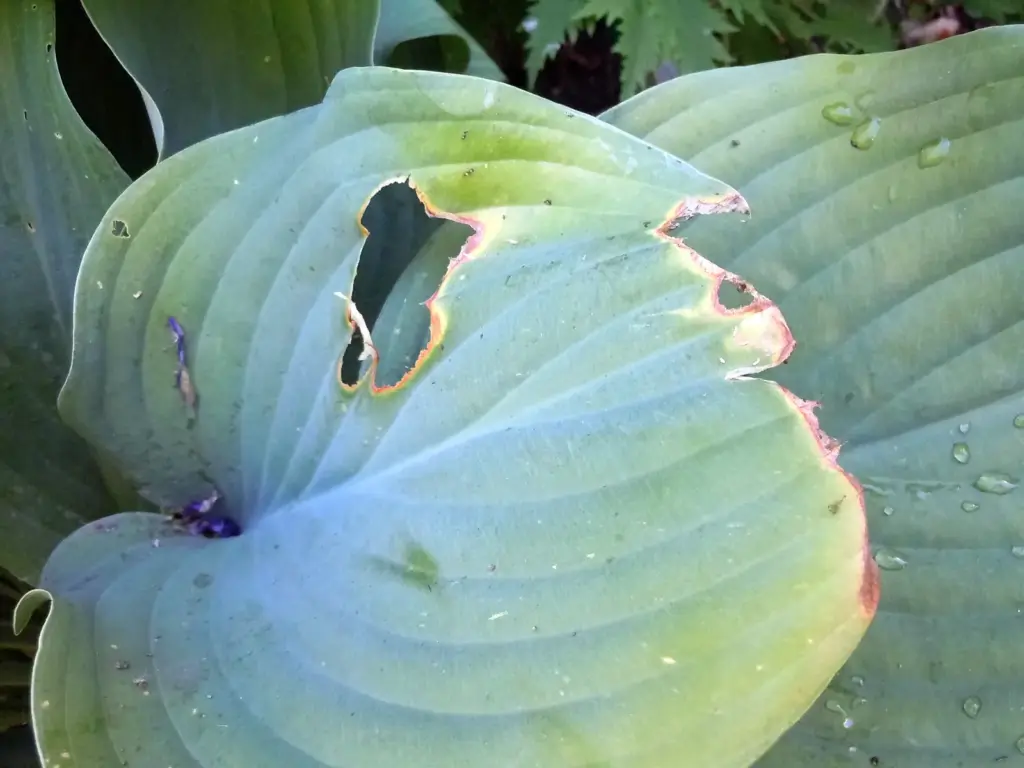
Snail and slug damage on hostas. Ragged holes, usually overnight.
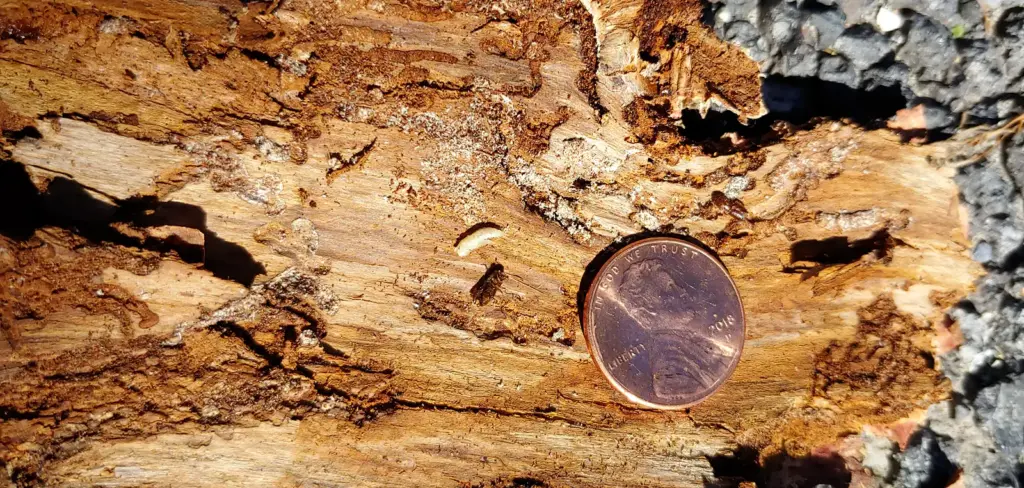
Bark beetle galleries under spruce bark. The pattern is close to a signature for the species.

Die-off starting at the very top of a spruce, caused by bark beetles.
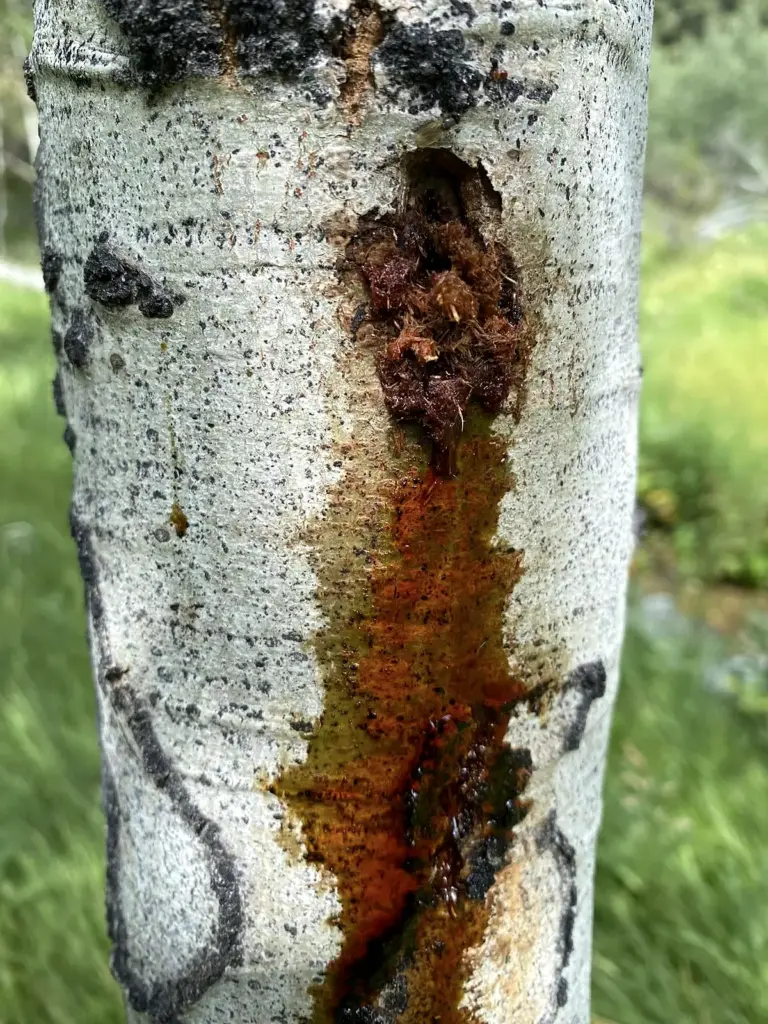
A borer wound weeping down white aspen bark.
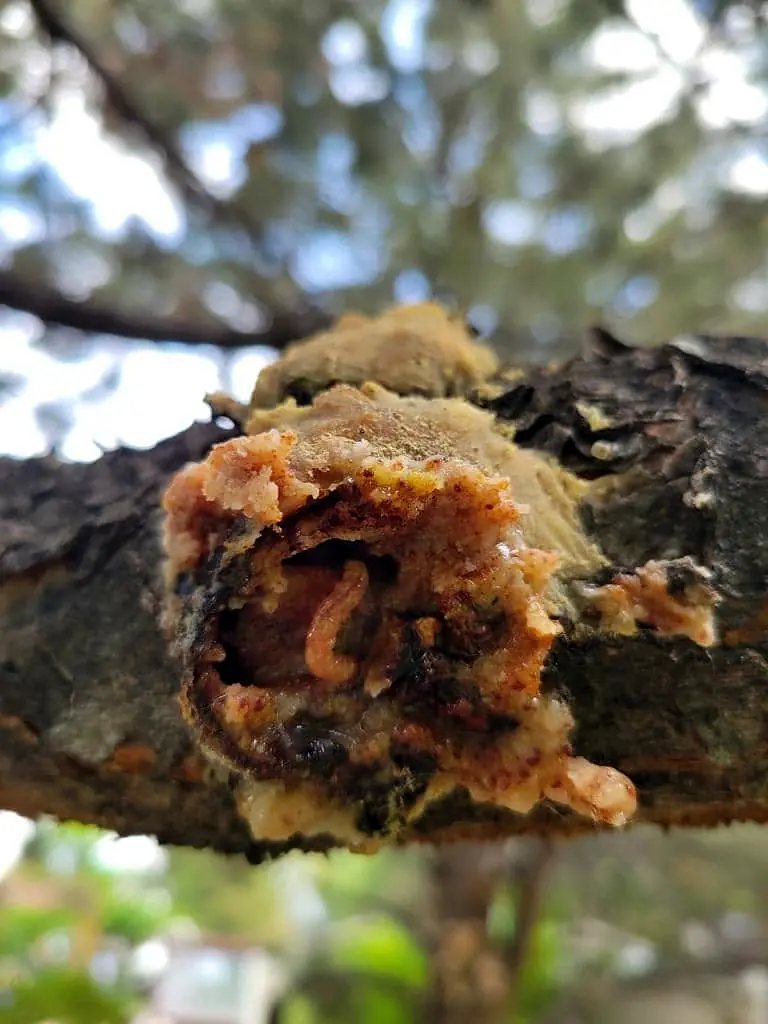
Decay found inside a branch union, invisible from the ground.
Diseases and damage
Disease needs a way in. Pathogens travel on insects, rain, wind and dirty pruning tools, and they get into the tree through blossoms, wounds and natural openings. That’s why timing matters so much with disease: a spray during bloom can prevent an infection that no spray will cure in August.
Not everything here is a disease. Herbicide damage shows up on trees that were never sprayed themselves. Drift and root uptake from a nearby lawn treatment will do it, and it’s regularly mistaken for something contagious.

Fireblight. Blackened leaves and shoots that look scorched, hence the name.

Fireblight, with the shoot tip curled into a shepherd’s crook.
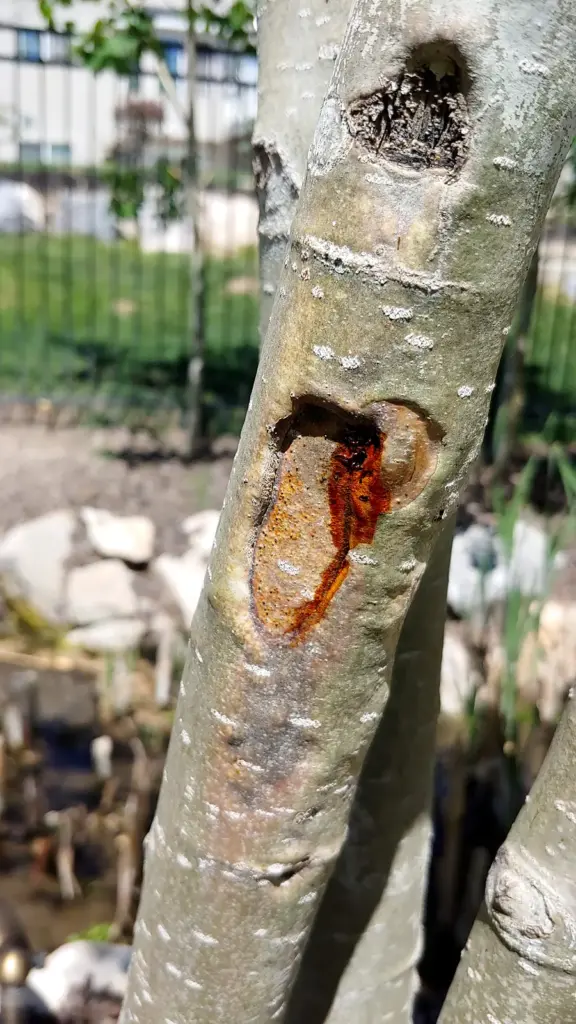
Canker. A sunken, dead patch in the bark.
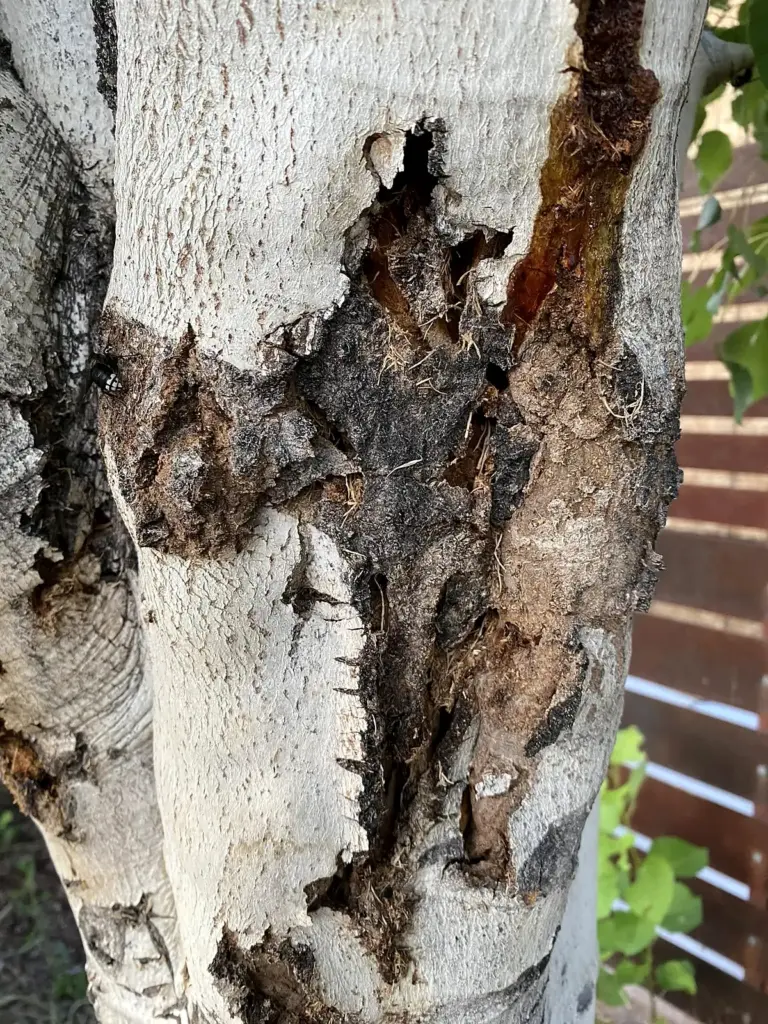
Canker damage running down a trunk.
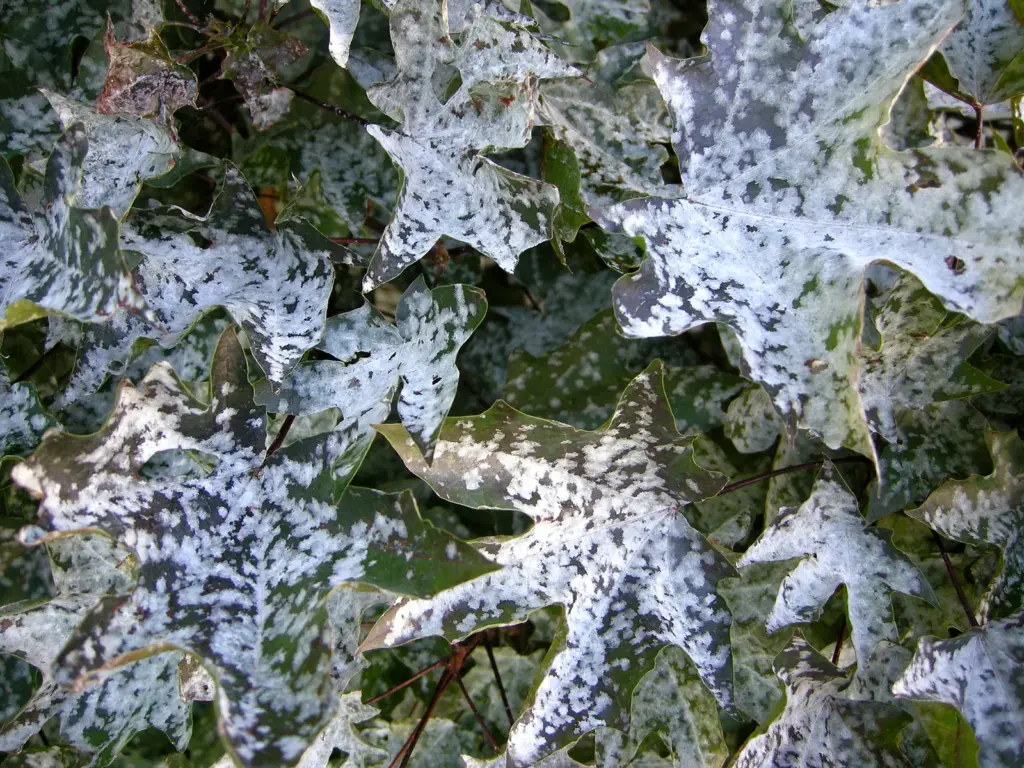
Powdery mildew. It wipes off, which is how you tell it from other leaf spots.
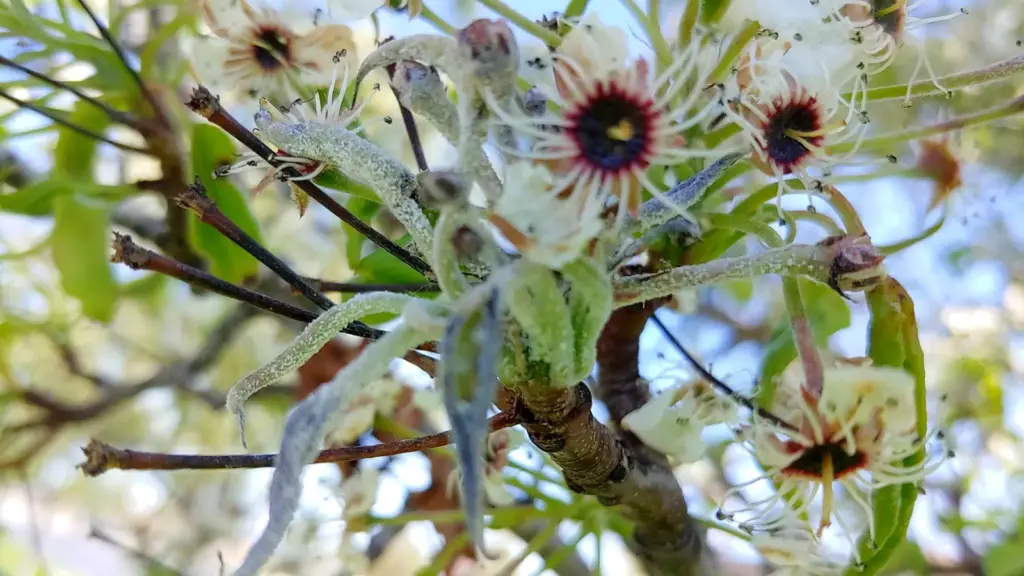
Powdery mildew spreading across foliage.
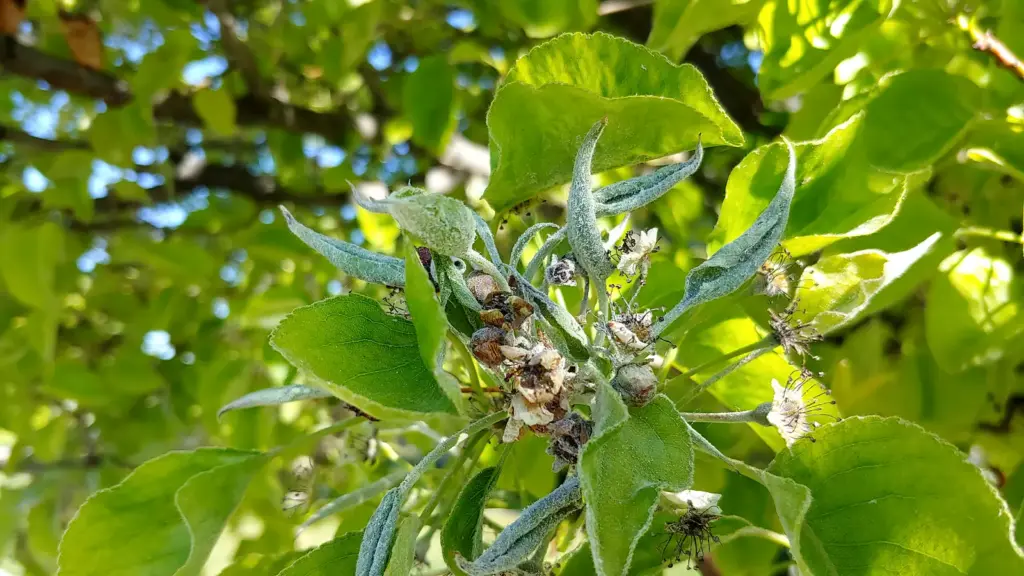
Powdery mildew on a shrub.

Verticillium wilt. A soil fungus that blocks the tree’s water supply from inside.
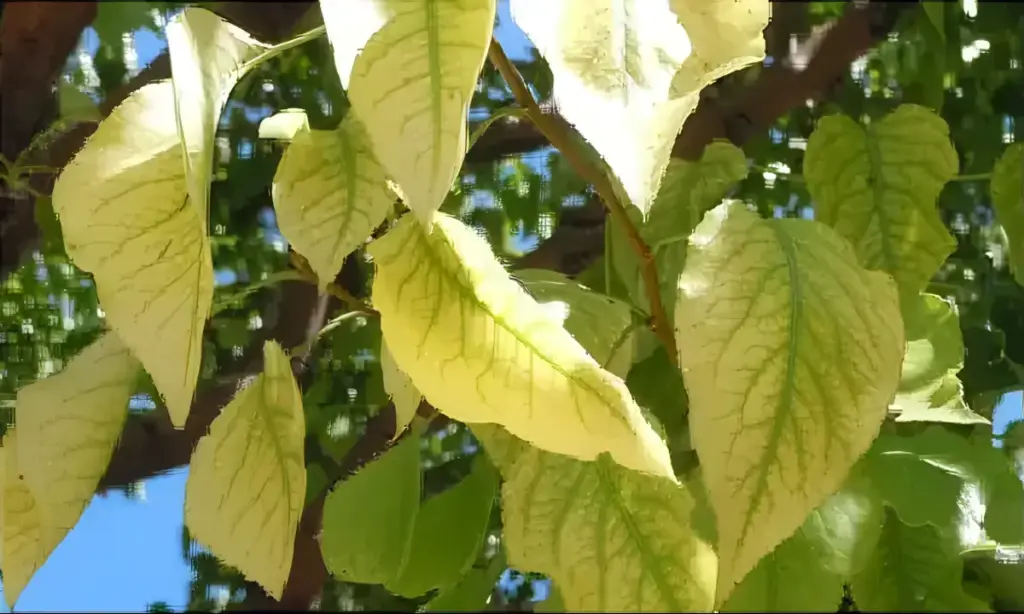
Iron chlorosis. Yellow leaf, dark green veins. The classic pattern.
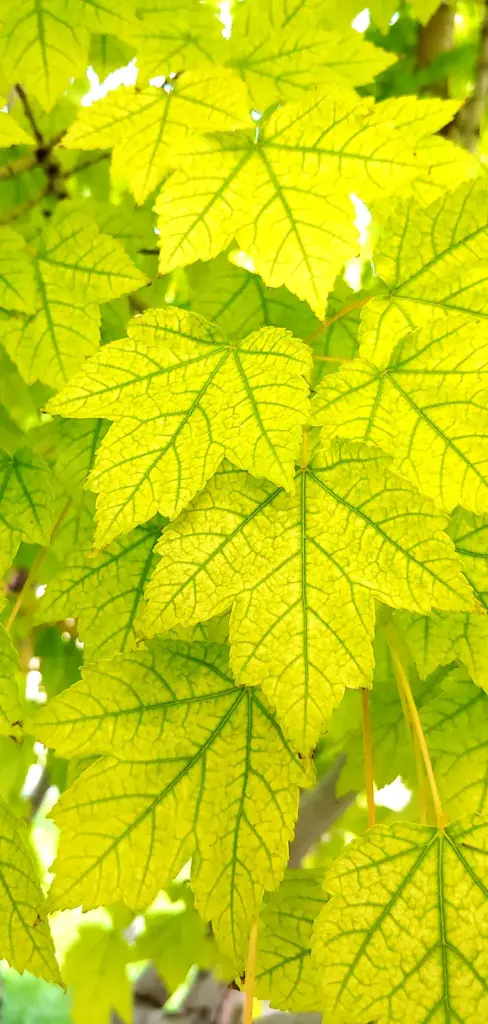
Iron chlorosis on maple, advanced enough to have shrunk the leaves.
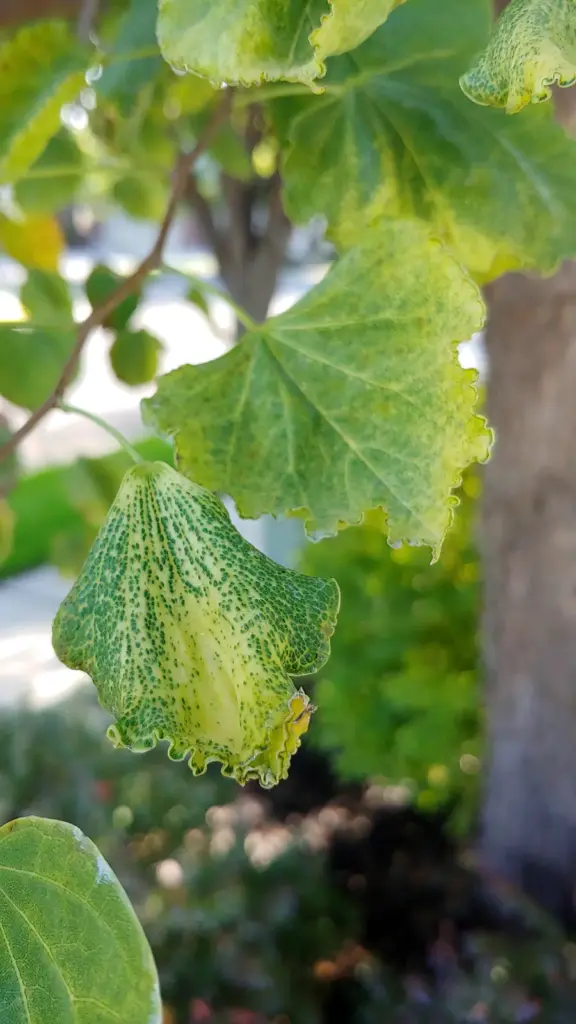
Herbicide damage. Note the cupped, distorted growth.
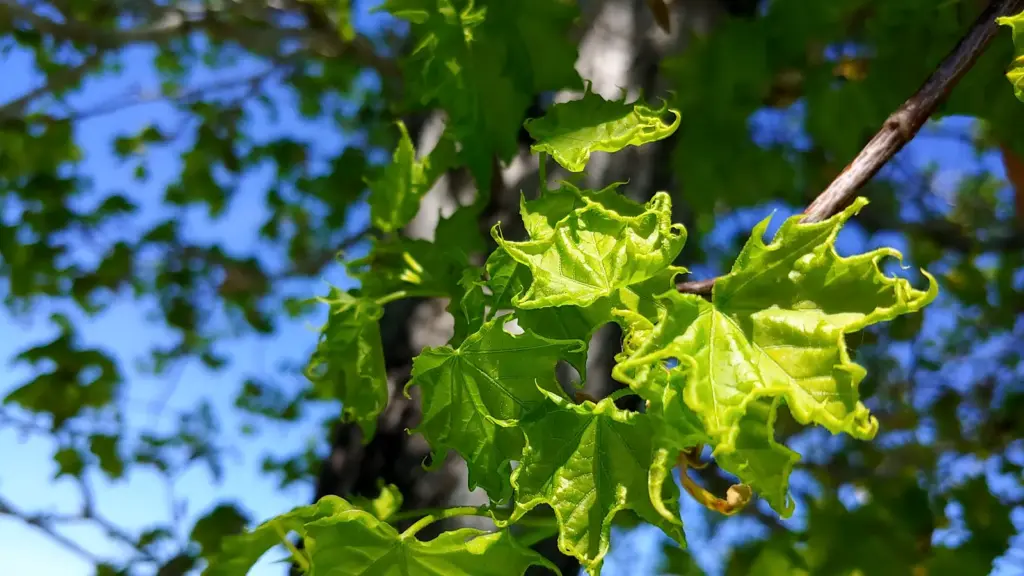
Herbicide damage on foliage.


Not sure what you’re looking at?
Neither is half the internet. Send us a photo, or have a certified arborist come and look at the tree in person. The inspection and the estimate are free.