
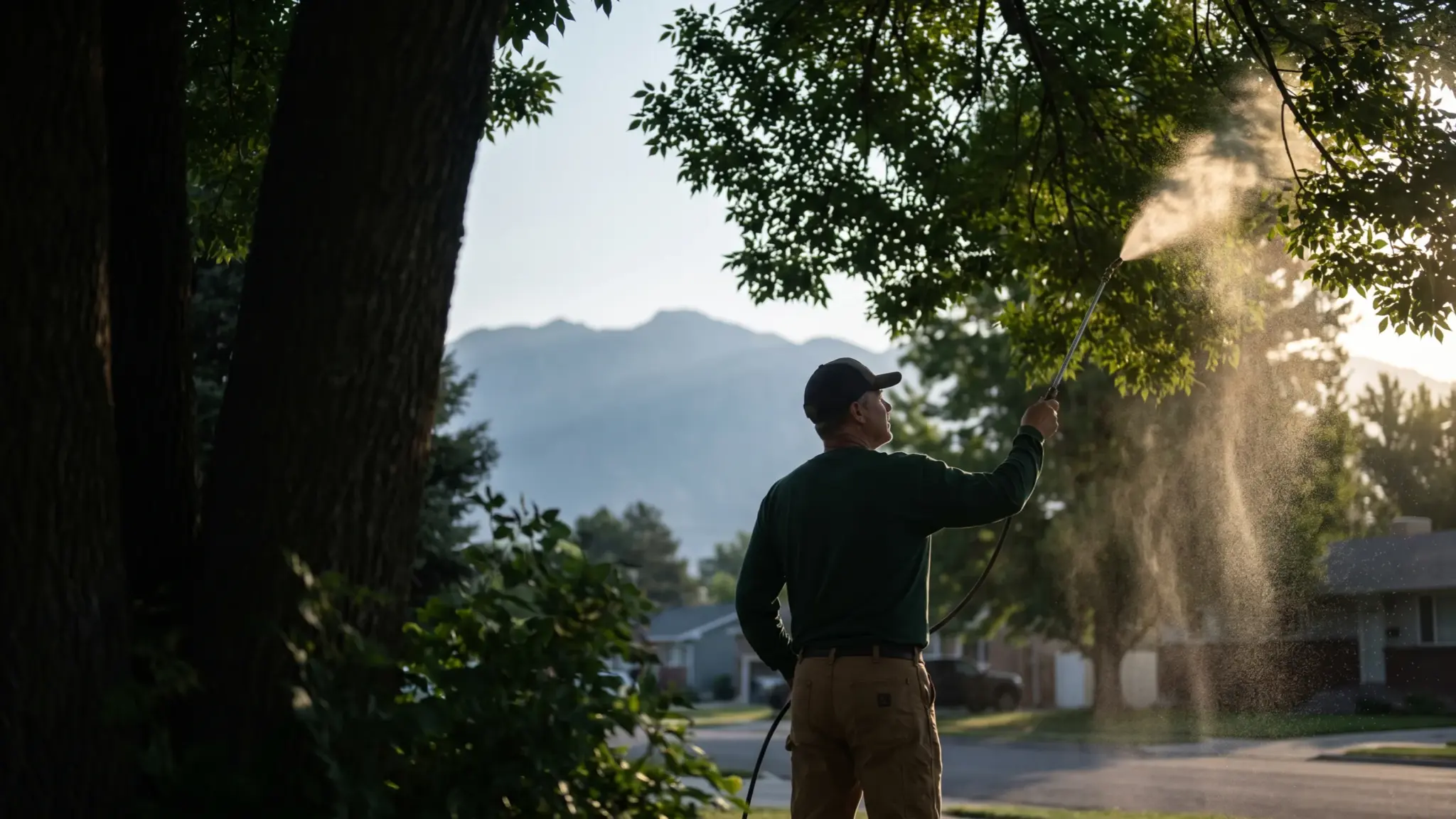
Tree & shrub pest control
Insects damage a plant in three ways: chewing, sucking and boring. Treating one is useless against the other two, which is why we identify the insect before we estimate the job.
 ISA Certified Arborists
20,000+ customers since 1985
Free on-site inspection, usually within 3-5 business days · We identify the insect before we estimate · Safe to walk on once dry
The ash tree that stopped dropping its leaves.
“I had an Ash tree losing a lot of leaves all summer. … The treatment they did greatly helped the tree. No leaves fell this summer which was such a relief!”
Kristin Gonzales
“ArborCare treated our maples with iron and an ash tree that had borer damage. The maples have significantly improved. … They were also very economically priced.”
Amy Jarman
We identify the insect first, because the wrong treatment does nothing
We identify the insect first. That sounds obvious, and it’s routinely skipped.
The treatment for something chewing leaves is useless against something drinking sap, and both are useless against something already inside the trunk. Insects damage trees and shrubs in exactly those three ways, and each one points to a different product, a different delivery method, and a different time of year.
It’s also worth saying that a lot of what gets blamed on insects isn’t insects at all. Yellow leaves, a thinning canopy and early leaf drop are just as often water, planting depth or soil chemistry. If that’s what we find, we’ll tell you, and we won’t sell you a spray.
Aphids and scale: sap feeders we can reach from inside the tree
Scale insects barely look like animals. They settle in one spot, stop moving for the rest of their lives, and build a shell over themselves. Oystershell scale builds it out of its own shed skins and wax. From a step back they read as a bump in the bark, which is exactly the idea. They feed by drinking sap. Soft scales excrete honeydew; armored scales don’t, which is a useful clue when you’re working out which one you have.
Aphids are soft-bodied, come in most colors, and are very small, a sixteenth to a quarter of an inch. They cluster on roses, maples, lindens and fruit trees and drink the sap. The sticky shine on the leaves, the patio and your car underneath is honeydew, and the black film that follows is sooty mold growing on it. The mold isn’t a disease and won’t infect the tree, but it shades the leaf and reduces what it can photosynthesize. Deal with the aphids and the mold goes away on its own. Watch for ants, too: they farm honeydew producers and will defend them.
Both are sap feeders, and that’s good news for treatment. Anything moving inside the plant reaches them, so a soil systemic or a trunk injection works, and we don’t have to catch them on the right day with a spray.
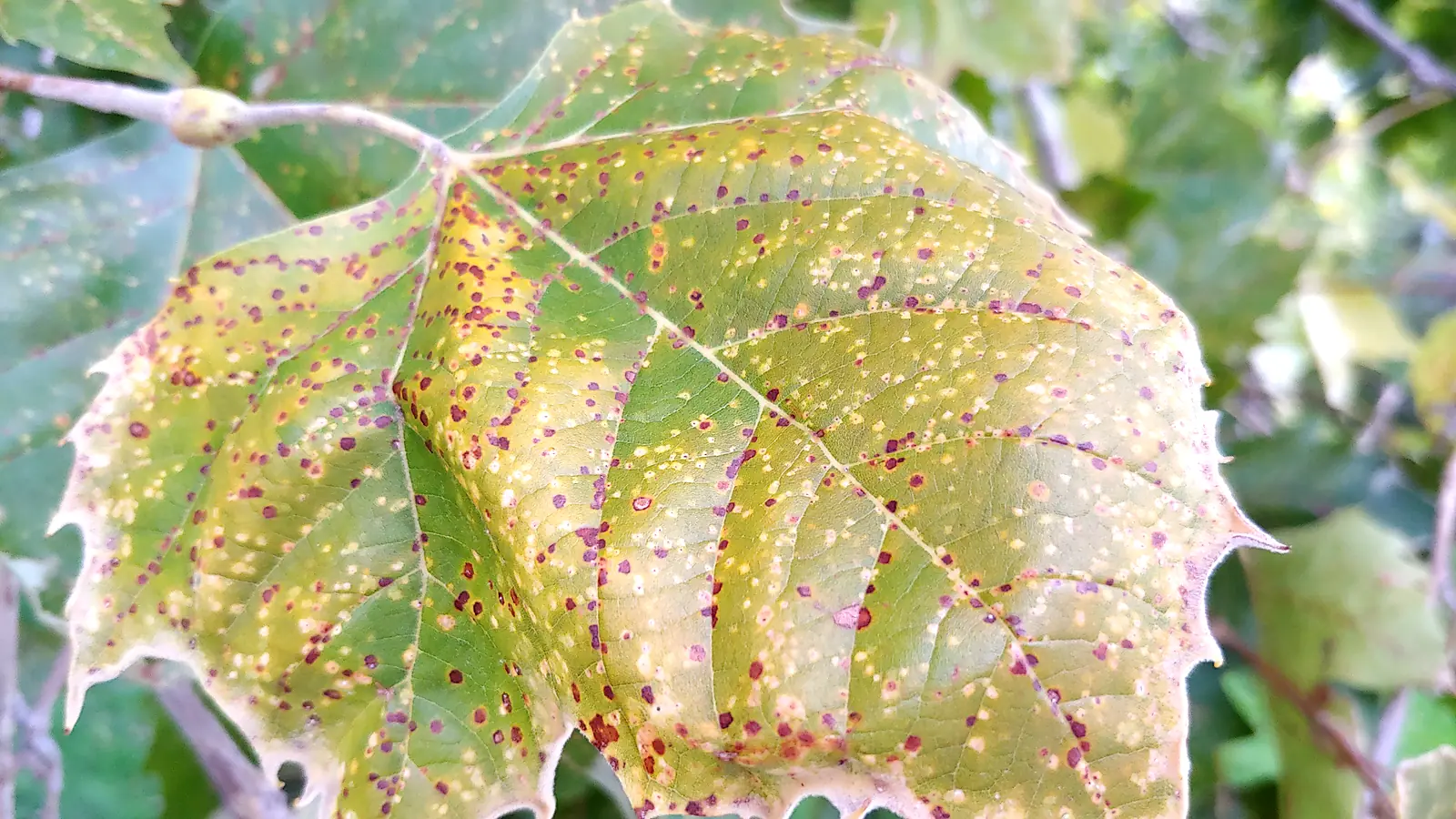
Scale on a sycamore branch
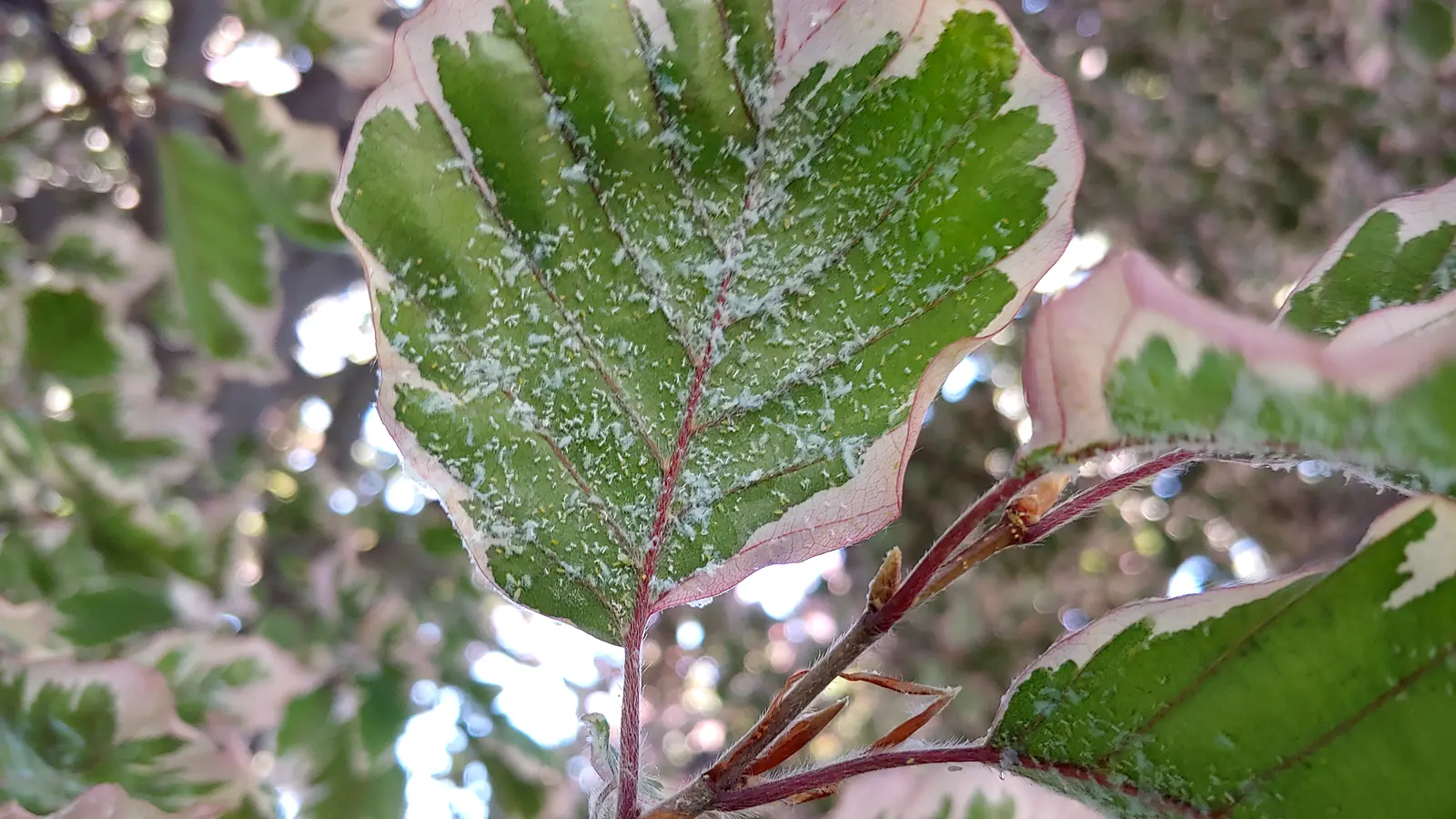
Woolly adelgid on beech
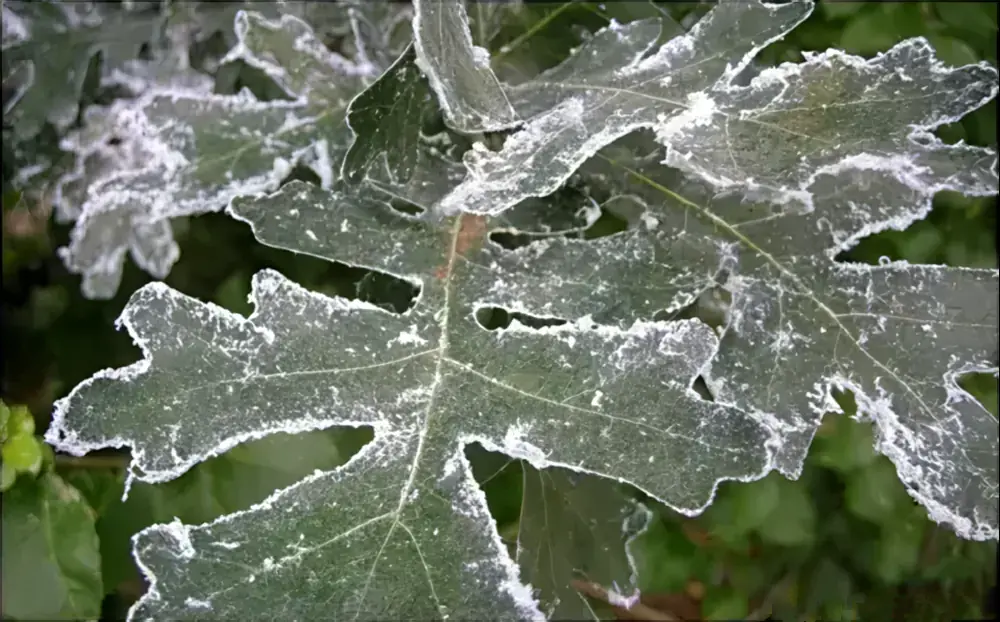
Woolly aphids on oak
Spider mites and root weevils: the damage you see is the smaller half
Spider mites aren’t insects. They’re eight-legged arachnids, barely visible, and hot dry weather suits them perfectly, which is why they show up in a Utah August. The tell is a dusty, faintly bronzed look to the leaf surface and fine webbing underneath, followed by dieback. Common hosts include Alberta spruce, junipers, honey locusts, fruit trees and many shrubs.
Root weevils chew neat notches out of the edges of leaves, which is the visible half of the problem. The larvae are underground eating roots, which is the half that matters. Look for them on privet, euonymus, laurels and lilacs.
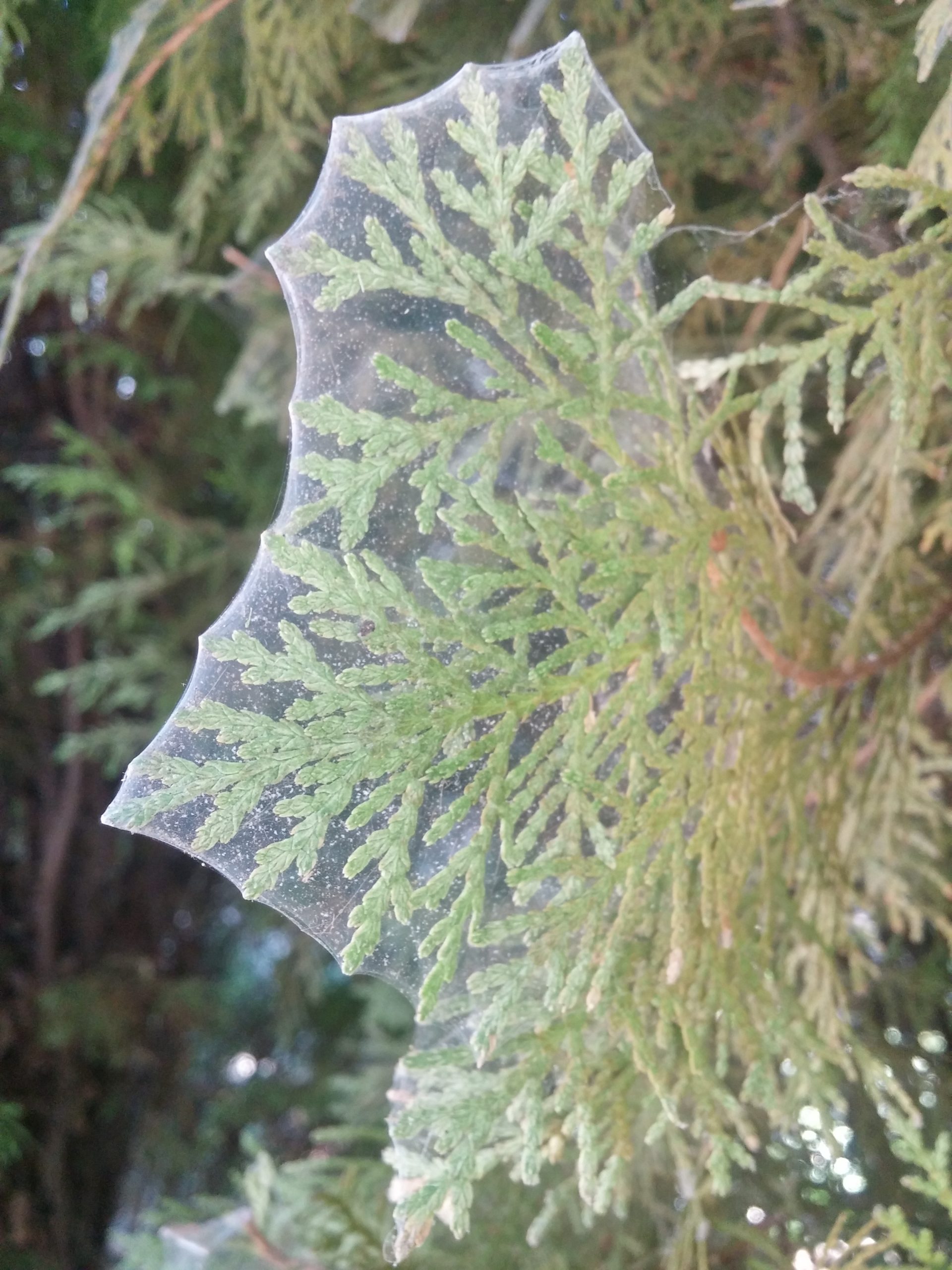
Spider mites on arborvitae

Turpentine beetle pitch tubes on a conifer trunk
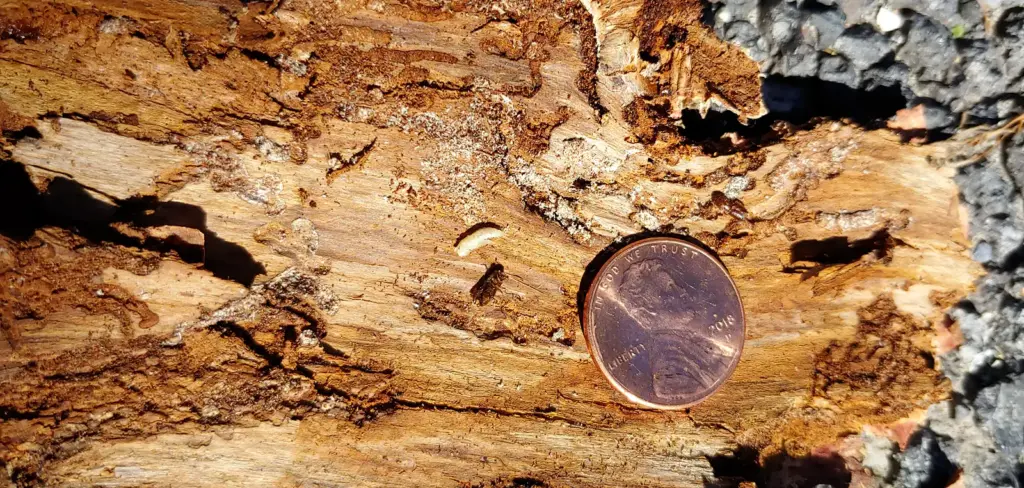
Bark beetle galleries under spruce bark
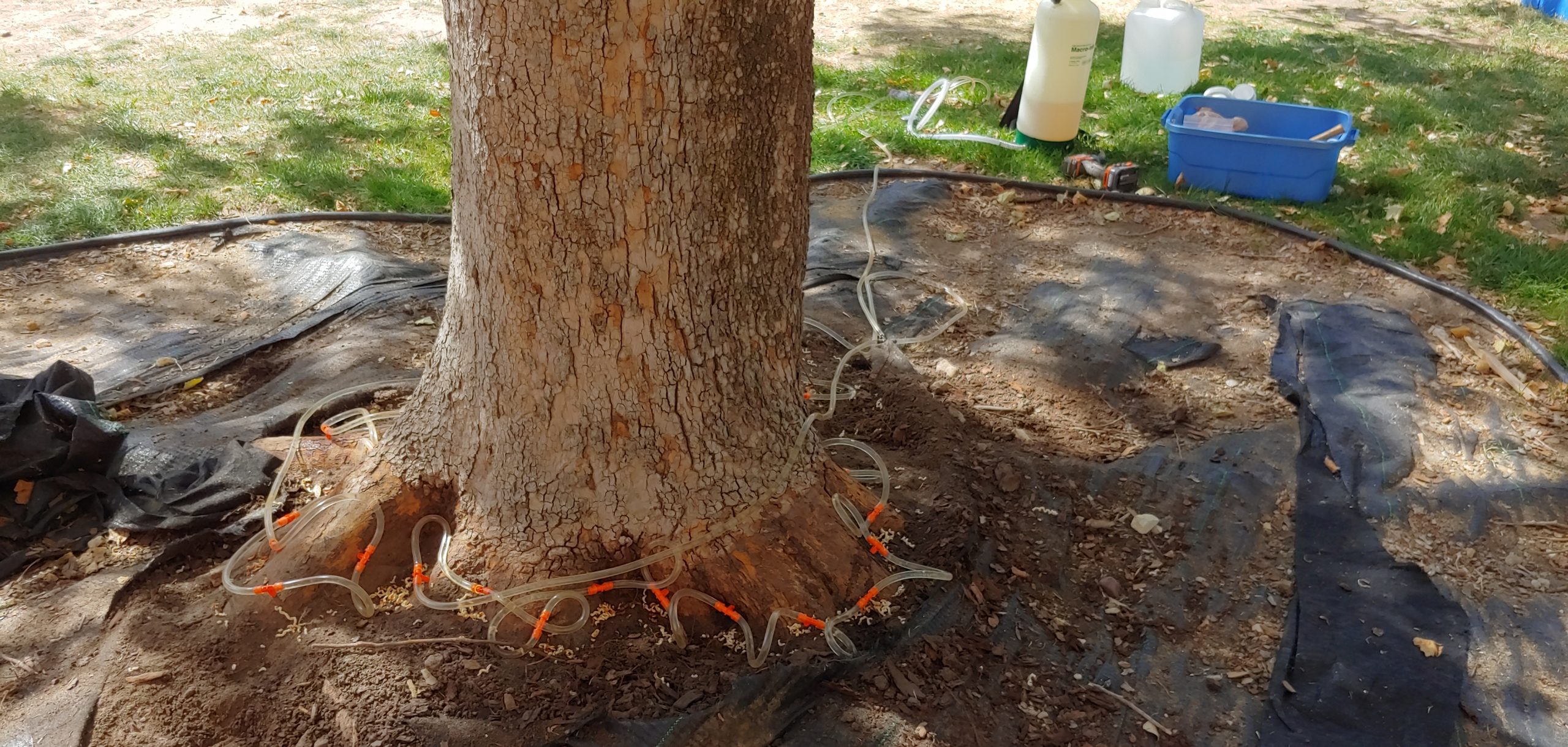
Trunk injection to help prevent bark beetles
Bark beetles and borers: by the time the tree looks sick, they’ve had a year
These are the ones that keep arborists up at night, because the insect is inside the wood where nothing can reach it and the tree looks fine until it very much doesn’t. Some, like the Ips bark beetle, stay just under the bark in the cambium. Others, like the ash/lilac borer, start there and tunnel deeper into the sapwood.
The evidence differs by species, and reading it correctly is most of the diagnosis. Pitch tube borers leave obvious entry holes low on the trunk with sap or frass pushing out. Sawdust at the base means something is actively tunneling above it. The bronze birch borer gives you nothing at all until a branch in the upper crown starts dying, by which point it’s been at work for a season or more.
One principle holds across nearly all of them: borers go for trees that are already in trouble. Drought stress, planting depth, girdling roots, compacted soil and bark wounds are what put a tree on the list. Newly planted trees are especially vulnerable for their first few years, and small-diameter trees far more so than established ones. A vigorous tree can often push an attack back out on its own.
Which means prevention is largely about keeping the tree healthy: deep, infrequent watering rather than a daily sprinkle, correct planting depth, and not wounding the trunk with a mower. Where treatment is warranted, sprays and systemic injections both have a place depending on the species and how far along it is. We need to assess the tree first: general health, damage already done, and realistic risk.
- Ips bark beetle and turpentine beetle: evergreens such as spruce, pine and fir
- Pitch tube or pitch moth borer: pine trees
- Engraver beetle: fir trees
- Cherry shot hole borer: cherry trees and other stone fruit trees
- Ash/lilac borer: ash trees, lilac and privet. A clearwing moth that mimics a paper wasp, active from roughly May into midsummer
- Bronze birch borer: all species of birch, starting in the upper crown
- Locust borer: black, Idaho and Purple Robe locust trees
- Roundheaded and heartwood borers: maple trees and apple trees
- Peachtree borer: peach and nectarine trees
- Aspen borer: aspen and other poplar trees
- Elm bark beetle: elm trees
Sawdust at the base? That one’s worth a call this week.
Borers work from inside the trunk, and the tree looks fine until it very much doesn’t. A free inspection tells you whether yours is at risk, and what it would take to hold it.
Galls, snails and slugs: mostly cosmetic, and we’ll say so
Gall-forming insects and mites cause the bumps, spikes and felty patches you’ll find on maple, hackberry and linden leaves. Nearly all of them are cosmetic. The tree isn’t in danger, and the honest answer most of the time is to leave them alone. Where a gall is genuinely disfiguring a young tree, treatment is timed to the short spring window when the insect is exposed.
Snails and slugs are more of a hosta-and-shade-bed problem than a tree problem, but they come up on nearly every irrigated property in the valley, and we treat for them.
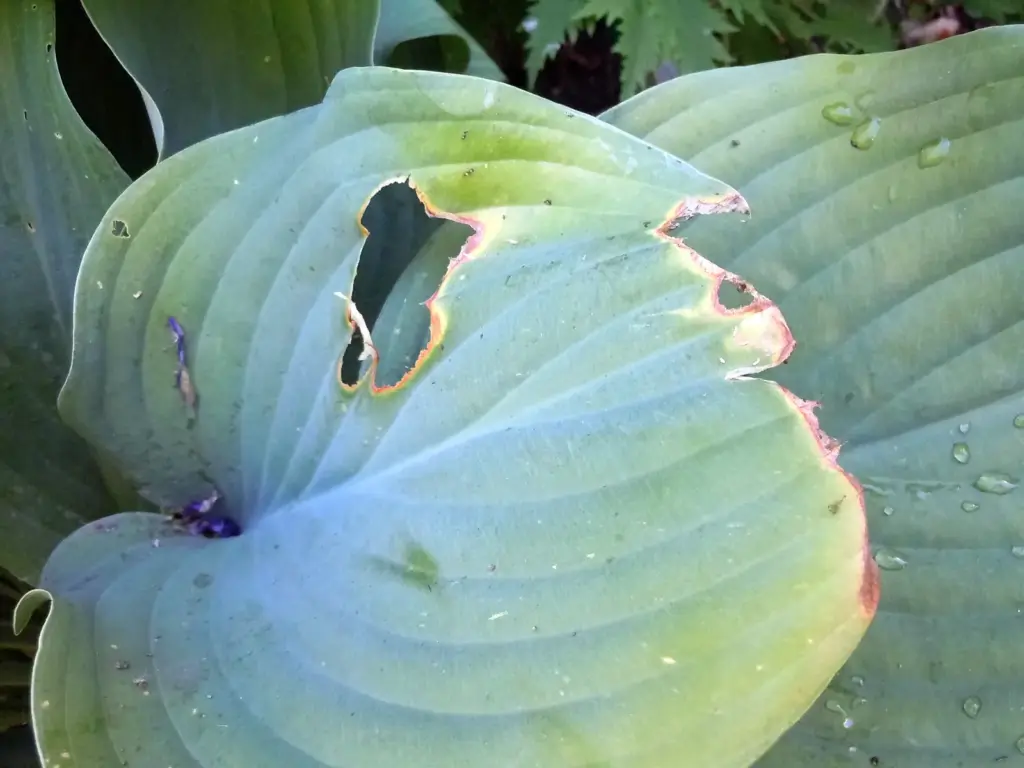
Snail and slug damage on hosta
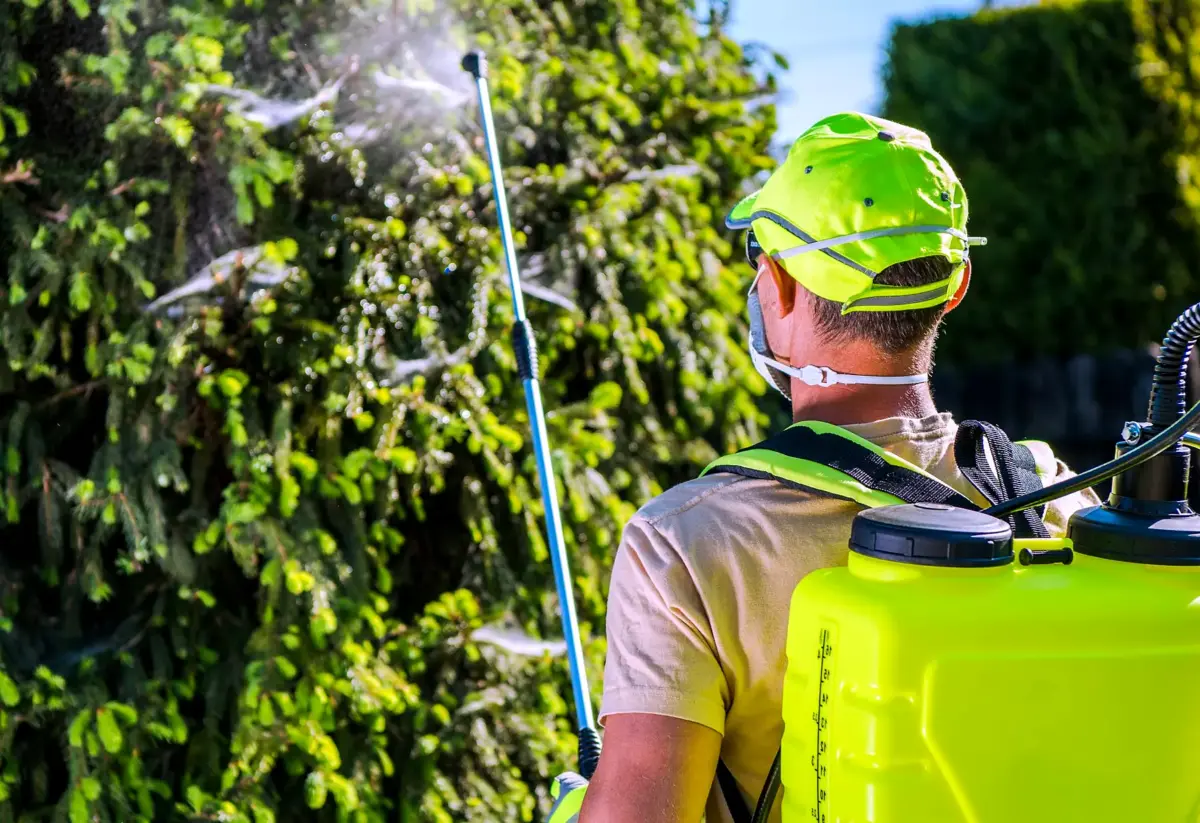
Five ways in, and the insect decides which one
Five ways in, and the insect decides which one. The choice is about where the pest actually is, and about what’s underneath the tree, because a vegetable bed or a neighbor’s driveway rules some options out.
- Dormant oil: horticultural oil smothers overwintering eggs and scale. It works physically rather than chemically, so there’s nothing for a pest to build resistance to, and it leaves no active residue. Goes on while the plant is dormant, above about 40°F
- Foliar and bark sprays: for what’s on the surface, when it’s on the surface. Timed to the insect’s life cycle rather than the invoice date
- Soil systemic insecticide: applied to the soil, taken up by the roots and moved through the plant. Controls sap-feeders like aphids and some borers for a full season, without spraying anything into the air
- Micro injection: a small hole at the base of the trunk puts the material directly into the cambial layer. Best on medium and large trees under borer or bark beetle pressure. An injection is already inside the tree, waiting; a spray has to be there on the right day
- Bark banding: a treatment applied as a band around the trunk only. It never reaches the foliage or the ground, which makes it the sensible choice on tight lots, near vegetable beds, over patios, and anywhere a neighbor’s property starts a few feet from the tree
Miss the window and you’re protecting next year, not this one
Roughly, and subject to the year the weather gives us.
- Late fall and early spring: dormant oil, while the plant is asleep and it’s above 40°F
- Early spring: soil systemics, before the tree leafs out and starts drawing hard
- Spring: bark banding, and the first borer sprays
- May into midsummer: ash and lilac borer flight
- Summer: spider mites, which want it hot and dry
- Any time the tree is moving water: trunk injection
Four steps from sawdust at the base to a tree that’s holding.
1
Free inspection
A certified arborist walks the property and works out what’s actually wrong. No charge, and no obligation.
2
It goes in writing
You get the diagnosis and the price before anything is treated, so there are no surprises on the invoice.
3
Treated in its season
We come back in the window that works on your tree, which is rarely the week you happened to call.
4
We check it
We look at how the tree responded and tell you what it needs next year, or that it needs nothing.
The questions we get asked before we start.
What if it turns out not to be insects?
Then we’ll tell you. Yellow leaves, a thinning canopy and early leaf drop are just as often water, planting depth or soil chemistry, and we won’t sell you a spray for a problem you don’t have. Sometimes the answer is feeding and soil work instead.
Is it safe for pets and children?
Everything goes on at label rate by a licensed, insured applicator, and treated areas are safe to walk on once they’re dry. There’s more detail on pet and pesticide safety.
Can you treat without spraying into the air?
Yes, three ways. A soil systemic goes on the ground and moves up through the plant. A micro injection goes straight into the trunk. Bark banding stays on the trunk only. None of the three touches the foliage.
How do I tell what I’m actually looking at?
Have a look at our insect and disease library, which has photographs of most of what we treat in this valley. If you still aren’t sure, that’s what the free inspection is for.


Find out what’s actually eating your tree.
A certified arborist comes out, figures out what’s wrong, and puts the recommendation in writing. Serving Salt Lake County, Davis County, Utah County and Park City.
- Free on-site inspection and a written estimate. No obligation.
- We’re usually out within 3-5 business days.
- ISA Certified Arborists. Licensed and insured pesticide applicators.
- Family-run in Salt Lake City since 1985.
- If your tree doesn’t need treatment, we’ll tell you that.
- Someone answers the phone, Monday to Friday.