
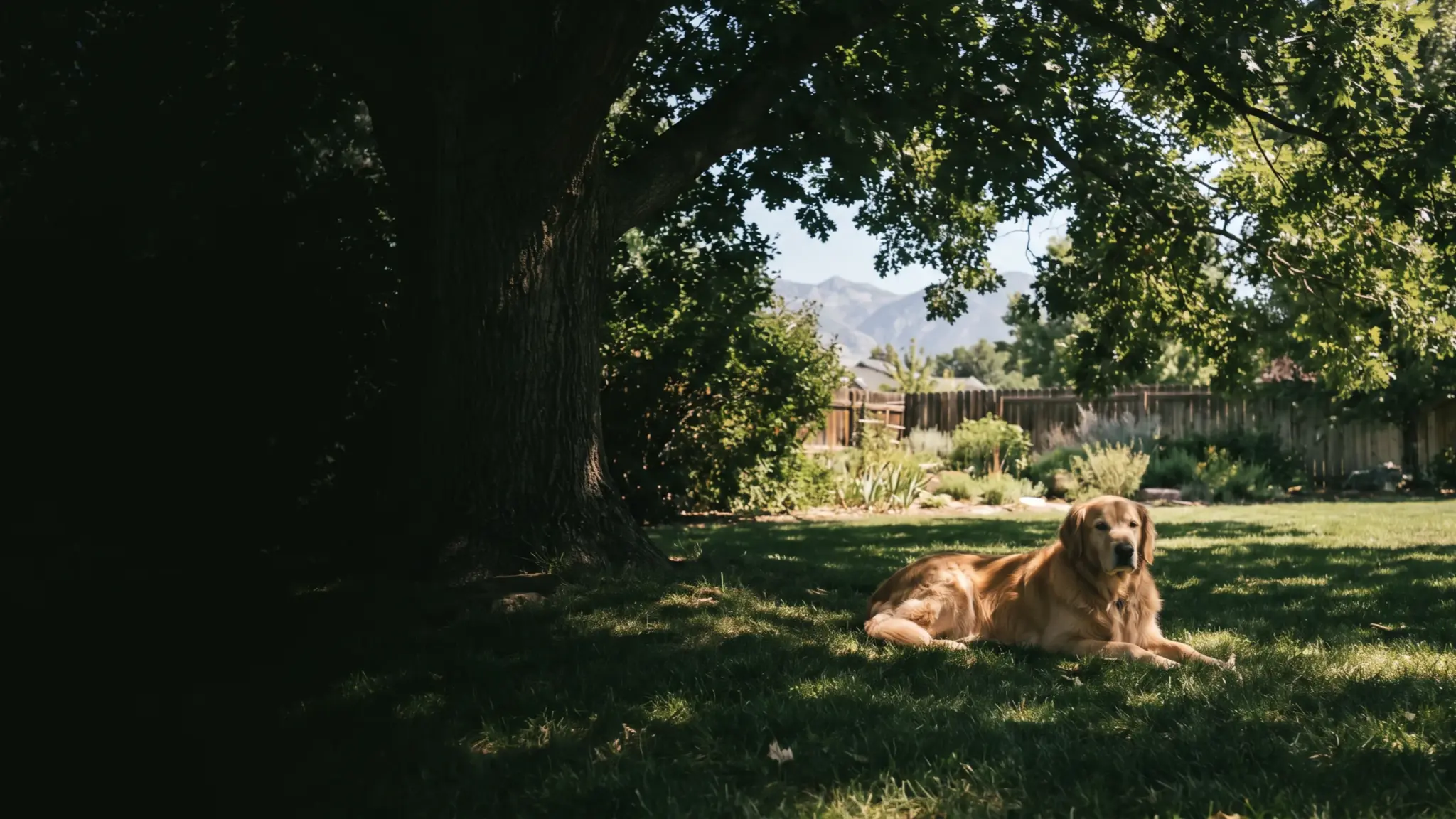
Is it safe for the pets?
It’s the question we get asked more than any other, usually before anyone asks about price. Here’s a straight answer, including the parts that depend on the product.
The best way to reduce exposure is to spray less
Integrated pest management sounds like jargon, but the practical meaning is simple: identify the problem correctly, then use the most selective treatment that will actually solve it. Selective means it targets the pest and leaves as much else alone as possible.
The result is fewer applications. We’re not on your property four times a year because the calendar says so. We come when a specific treatment has a reason and a window. A tree that gets two well-timed treatments has had less material on it than one that got six speculative ones, and it’s usually in better shape.
Browse the insect & disease library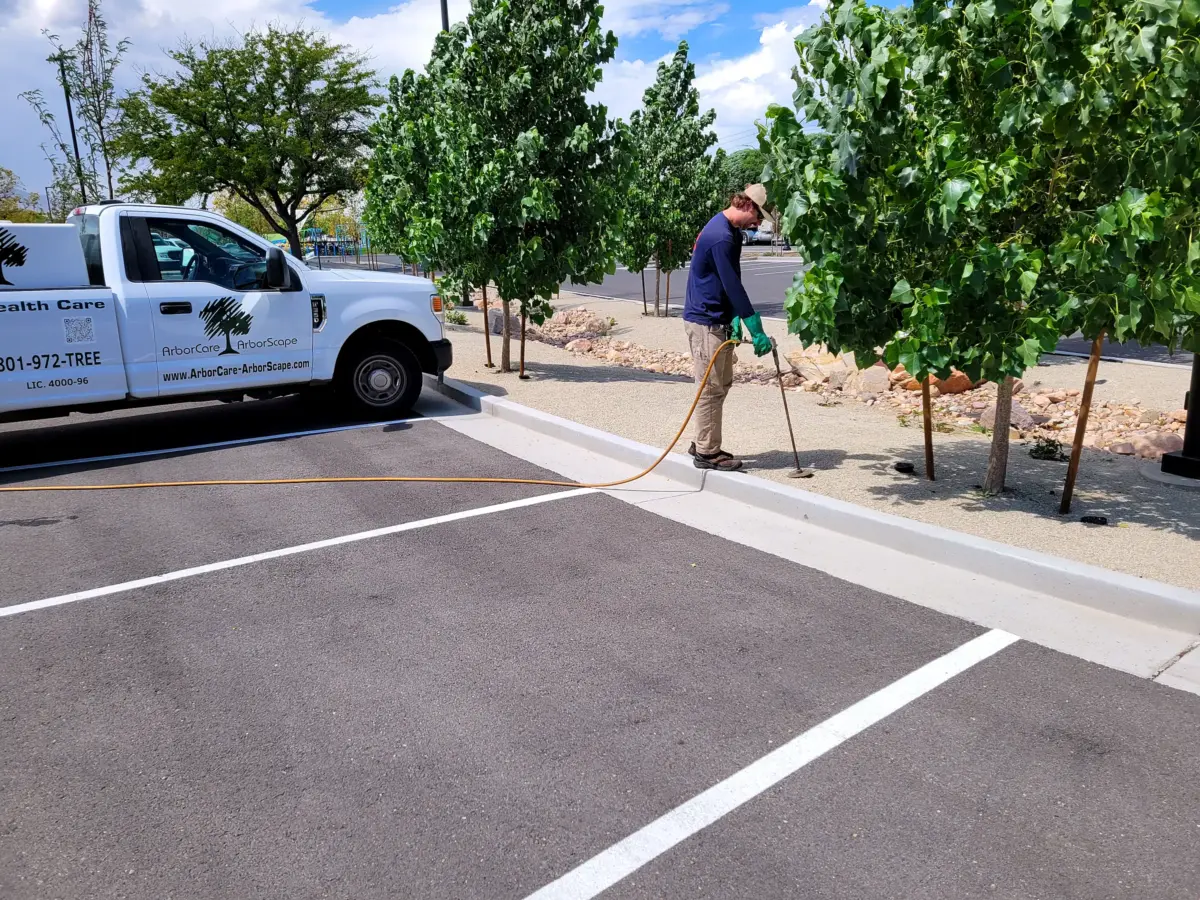
When can pets and children go back out?
For most of what we apply, the treated area is fine once the spray has dried. Drying depends on the product, the temperature and the weather that day, so the applicator will tell you what to expect before starting rather than after.
The honest caveat: re-entry is set by the product label, not by us, and it varies between products. If you want the specific interval for what’s going on your trees, ask on the day and we’ll read it to you off the label. Anyone who gives you a single blanket number for every product is guessing.
If you’d rather nobody was outside at all that day, say so when you book and we’ll schedule around it. It’s a common request and it costs nothing.
Treatments that never touch the yard
- Trunk injection goes directly into the tree’s vascular system through the trunk. Nothing is sprayed into the air, and nothing lands on the grass, the patio or the vegetable bed.
- Bark banding is applied as a band around the trunk only. It’s the usual answer on tight lots and anywhere overspray would be a problem.
- Soil drench and root zone fertilizing go into the ground around the roots rather than onto the foliage, and are watered in.
- Dormant oil works by physically smothering overwintering eggs and scale rather than by poisoning them. It does its job within minutes of drying and leaves no active residue on the plant, which is why it’s among the lowest-risk products we carry.
If pets, children or bees are a particular concern for you, tell us. On several problems there’s a choice between a spray and an injection, and we’ll take the injection.
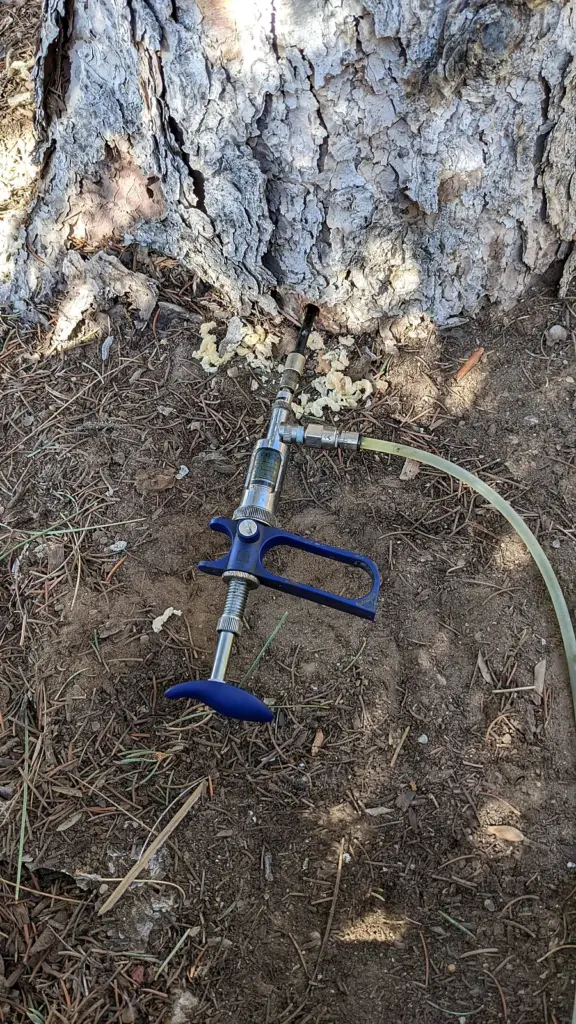
A micro injection port: nothing is sprayed and nothing lands on the lawn
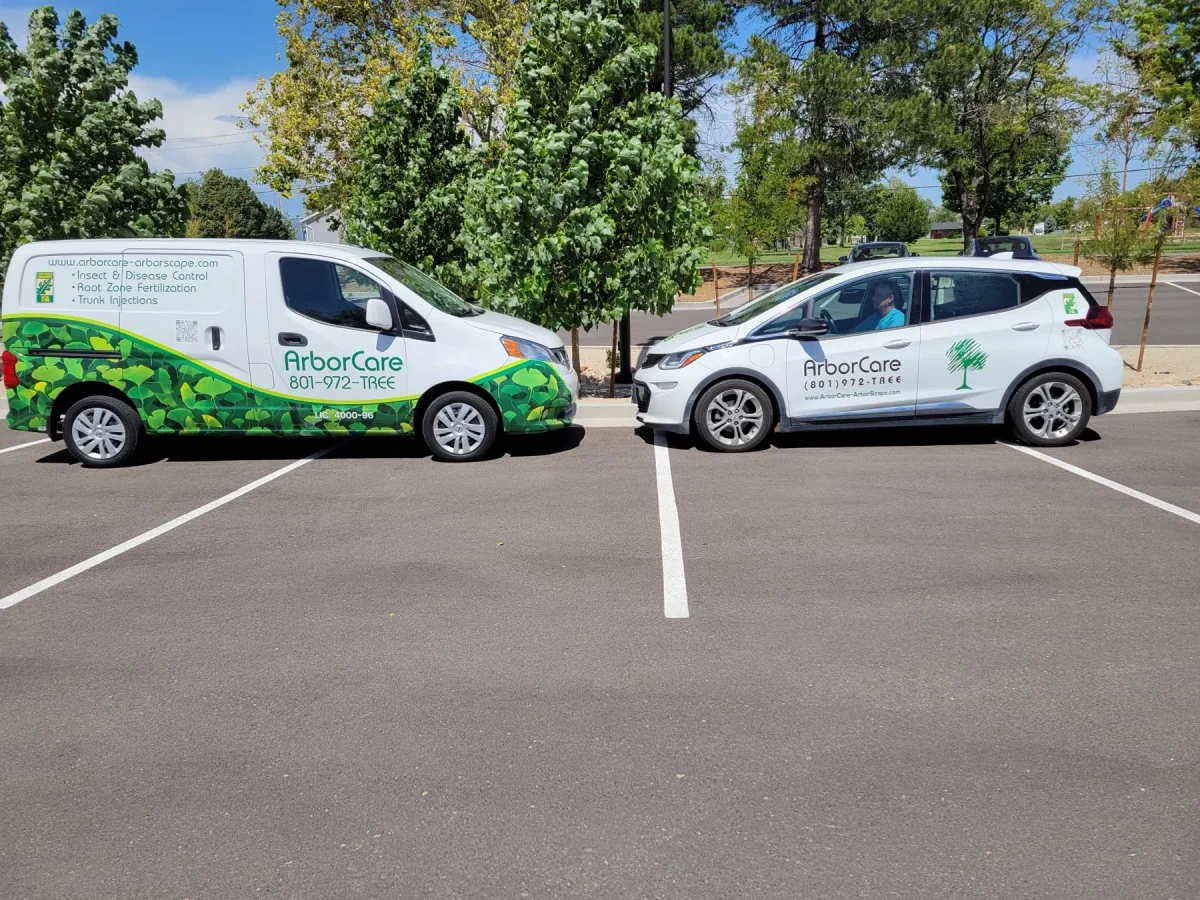
Licensed applicators, and a straight answer about what’s in the tank
Every applicator here is licensed by the state, and every one is trained in tree identification, biology and physiology. If you want to know exactly what’s being applied to your property and why that product rather than another, just ask. We’ll tell you the product name and the reasoning, and we’d rather you asked than wondered.


Questions before you book?
Call and a person will pick up. Two of them sit in the office, Monday to Friday, 8:00 am to 5:00 pm. Ask us anything, including the awkward questions.