
Iron chlorosis treatment
There’s plenty of iron in Utah soil. The trouble is your tree can’t utilize it.
 ISA Certified Arborists
20,000+ customers since 1985
Free on-site inspection, usually within 3-5 business days · We read the leaf pattern before we quote · Safe to walk on once dry
Green leaves on the trees that were yellow.
“ArborCare treated our maples with iron and an ash tree that had borer damage. The maples have significantly improved. … They were also very economically priced.”
Amy Jarman
“Outstanding Service! My Sunset Maple has never looked so good in 20 years! Thank you for saving my tree!”
Ken Abel
There’s iron in your soil. At pH 8, the roots can’t absorb it.
Utah soils are typical of dry climates everywhere: full of lime, and alkaline, with a pH generally somewhere between 7.2 and 8.3. At that pH, iron reacts into solid forms that roots simply can’t absorb. So this is rarely a shortage of iron. It’s iron the tree is locked out of.
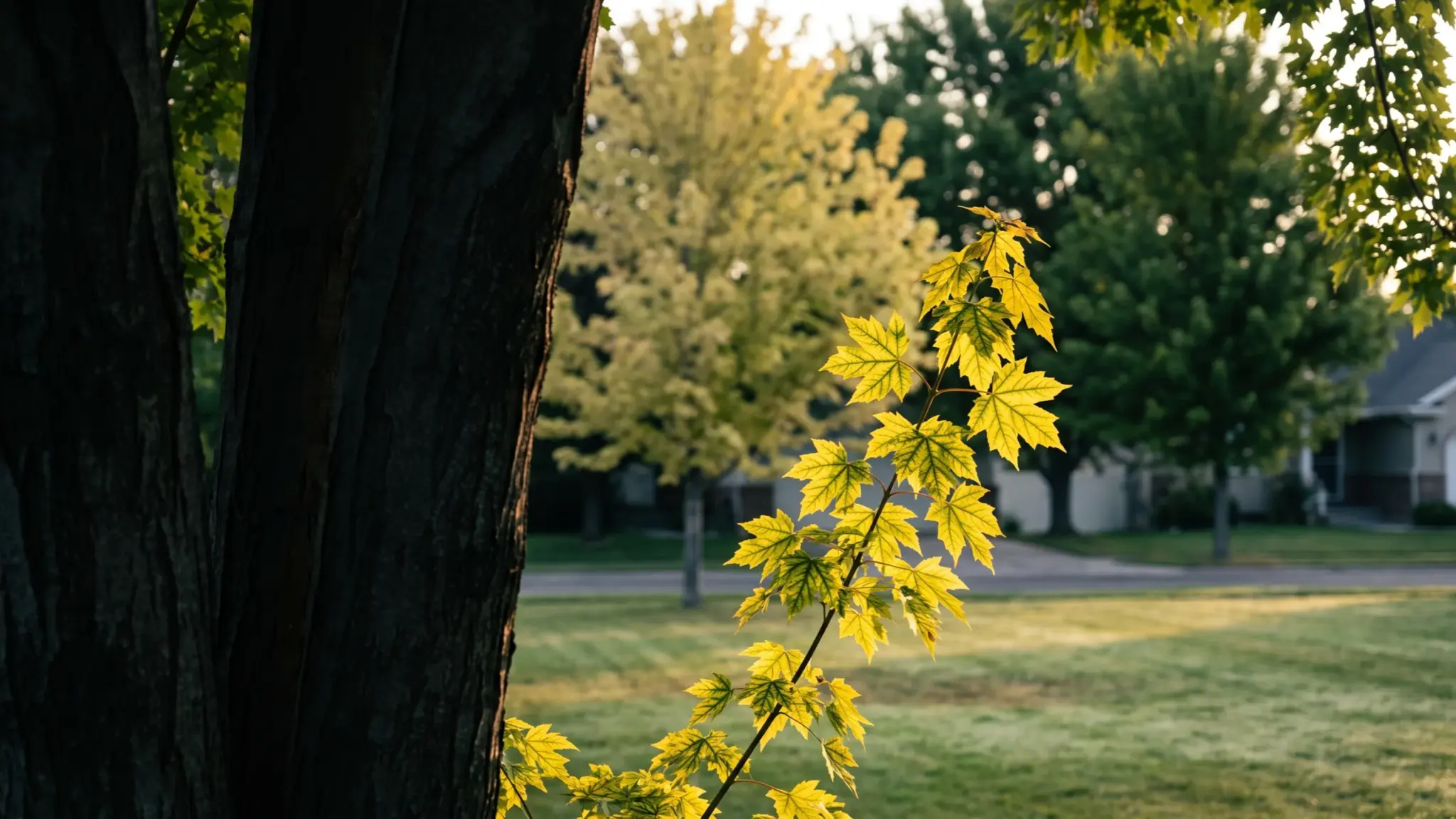
Iron is needed to make chlorophyll, the green pigment that runs photosynthesis. Starve a tree of iron and the leaf loses its color. But the veins, which get first call on what little arrives, stay green. That yellow leaf with a dark green vein network is called interveinal chlorosis, and it’s close to diagnostic.
It gets worse through the season. The first leaves may come out normal size with a little yellowing; later leaves emerge smaller and much paler. It can show on a single branch, on half the tree, or on all of it. Left to recur year after year, it thins the canopy, causes dieback, and can eventually kill the tree.
In Utah the regulars are silver maple, red maple, red oak, river birch, tuliptree, sweetgum, flowering pear and flowering plum, though the list isn’t closed.
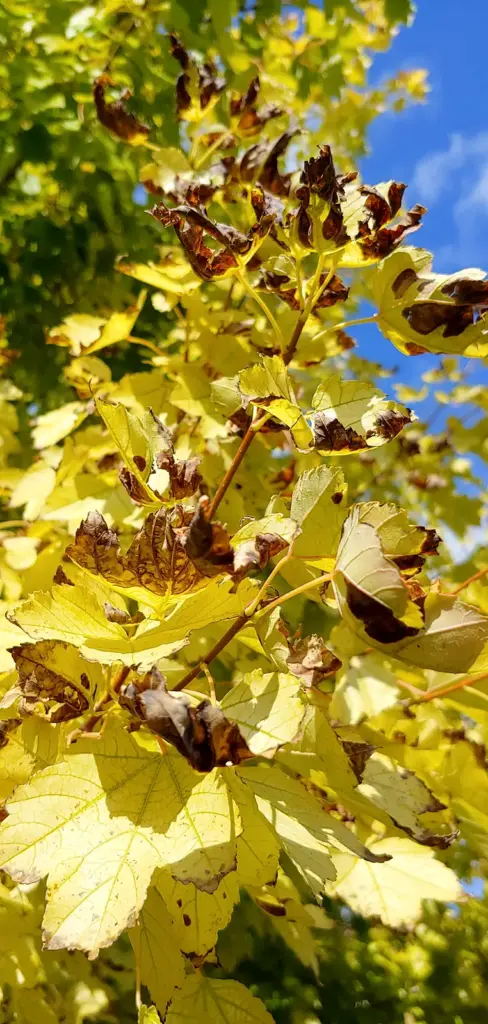
Severe chlorosis: small, pale leaves and twig dieback
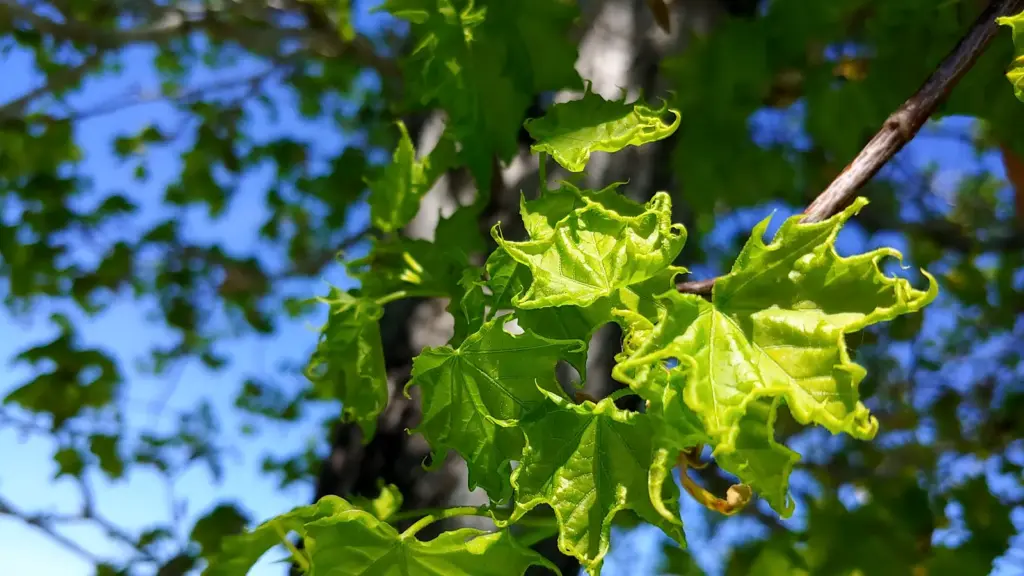
Herbicide drift: twisted, cupped foliage, not chlorosis
Yellow leaves aren’t always chlorosis
Worth saying it plainly, because we get calls about it all the time. Overwatering, herbicide drift from somebody’s lawn treatment, girdling roots and other deficiencies all turn leaves yellow, and every one of them needs a different answer, sometimes no treatment at all.
The pattern on the leaf is what separates them. Chlorosis leaves the veins dark green against a pale leaf, because the veins get first call on what little iron arrives. That’s close to diagnostic, and it’s the reason we look before we quote.
Yellow leaves with dark green veins? That’s chlorosis, and it’s fixable.
Anything else and it’s one of four other problems, each with a different answer. We read the leaf before we quote, and we’ll tell you which one you have.
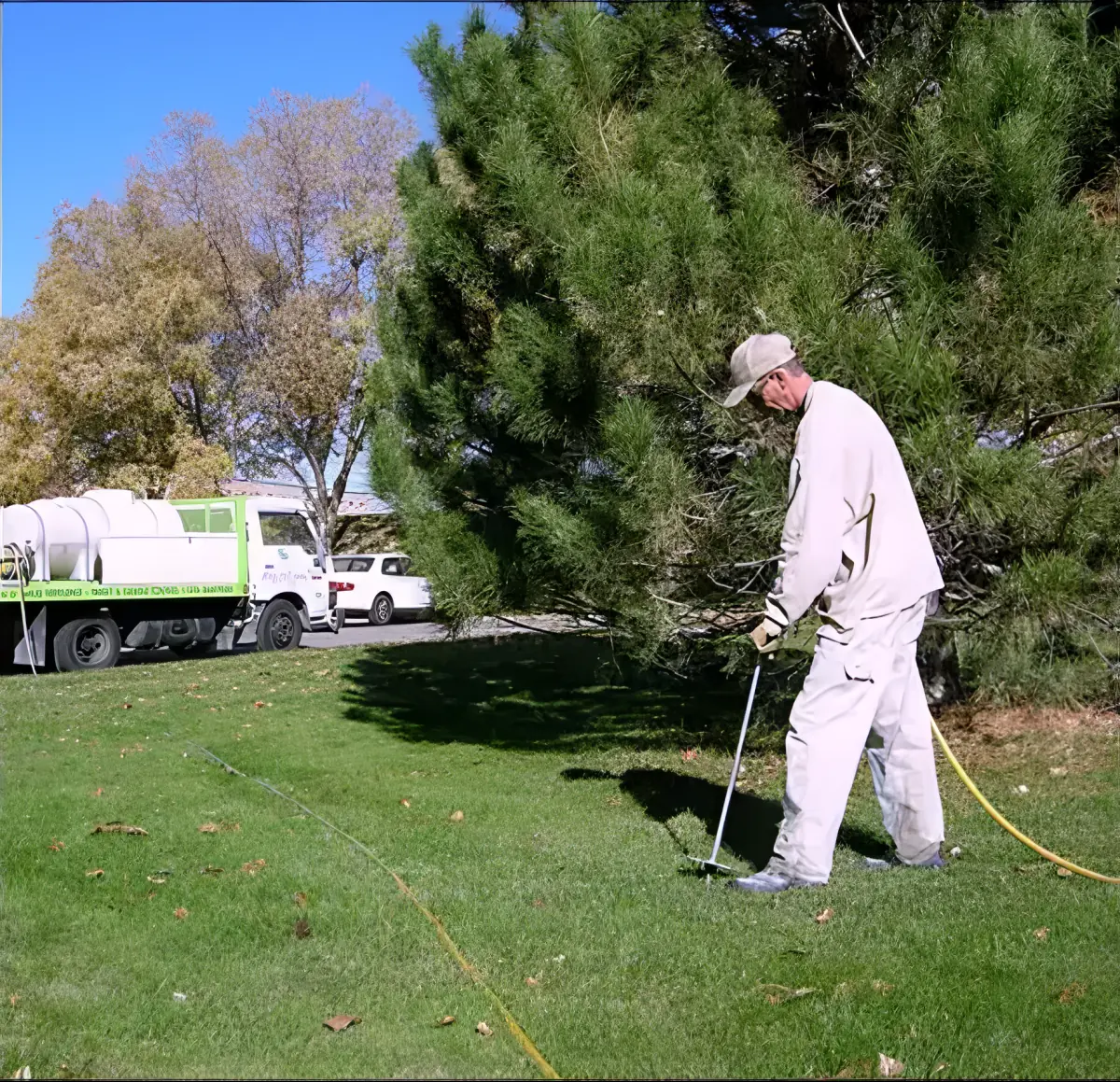
A trunk injection can hold a badly affected tree for two years
Liquid soil drench. Iron is mixed with fertilizer and applied around the root zone. The critical detail is which form of iron: most chelates fall apart at high pH and do nothing in our soil. The one that holds up in alkaline ground is FeEDDHA, and using the right chelate is the difference between a treatment and an expensive watering. Best applied in spring, though it can go on later if symptoms return. Other micronutrients can go in at the same time.
Trunk injection. Iron is delivered straight into the tree’s vascular system through small ports in the trunk, bypassing the soil chemistry entirely. It’s more involved than a drench and it does wound the tree slightly, so we don’t reach for it first. On a badly affected tree, though, it’s far more reliable, and a single treatment can hold for up to two years. We use a macro infusion system for this. It carries a higher volume than the micro injection we use for borers, because iron and fertilizer go in as a larger dose through ports in the trunk.
Foliar sprays are the third option, and we mention them mainly to set expectations: they green a tree up quickly and incompletely, and they don’t last. Soil and trunk treatments are what actually fix the season.
Iron rarely travels alone. When we’re already treating the root zone, a full macronutrient and micronutrient correction usually goes in at the same visit. See tree fertilization & soil health.
Treated, beside untreated
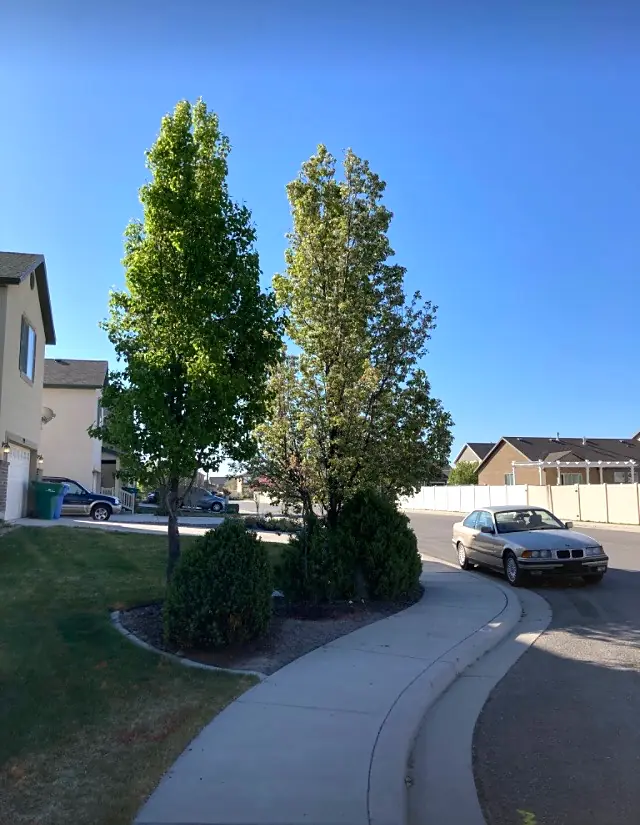
Flowering pear on the left treated by ArborCare with iron and fertilizing soil treatments. Compare with the neighbor’s untreated pear beside it.
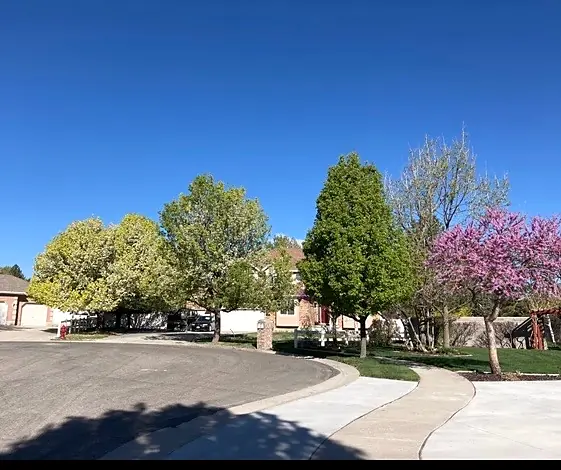
Flowering pear center right treated by ArborCare. Compare with the neighbor’s untreated pears to the left.
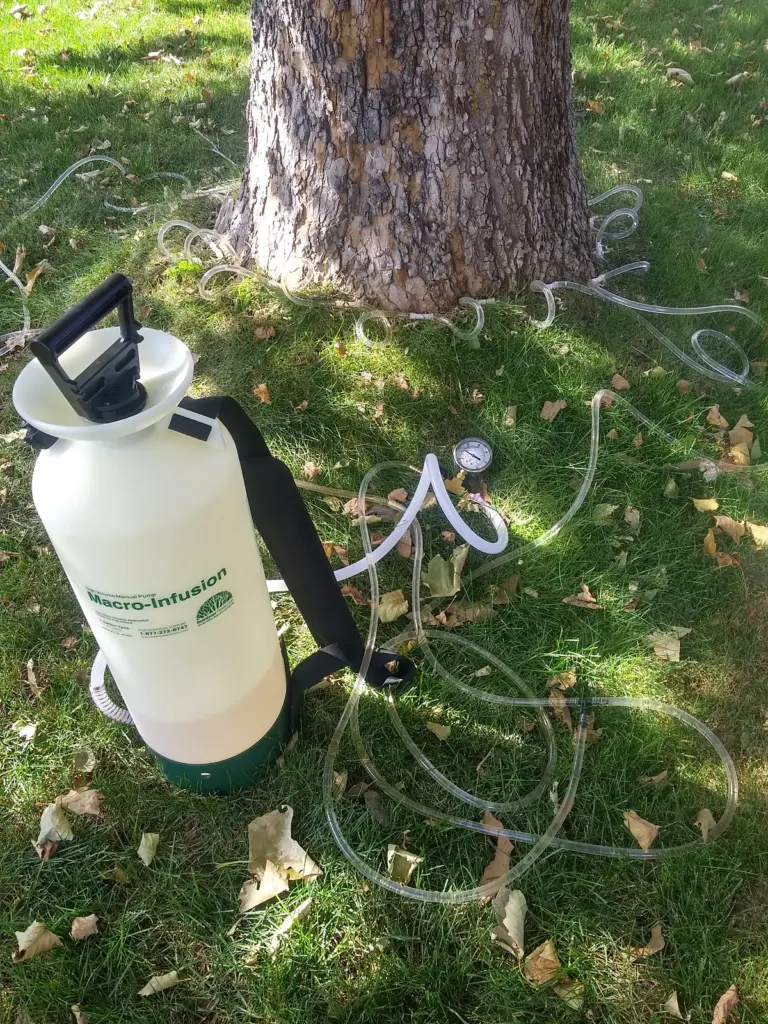
A sycamore recovering after macro infusion for iron chlorosis.
Four steps from a yellow canopy to a green one.
1
Free inspection
A certified arborist walks the property and works out what’s actually wrong. No charge, and no obligation.
2
It goes in writing
You get the diagnosis and the price before anything is treated, so there are no surprises on the invoice.
3
Treated in its season
We come back in the window that works on your tree, which is rarely the week you happened to call.
4
We check it
We look at how the tree responded and tell you what it needs next year, or that it needs nothing.
The questions we get asked before we start.
How do you know it’s chlorosis and not something else?
The pattern on the leaf. Chlorosis leaves the veins dark green against a pale leaf, because the veins get first call on what little iron arrives. Overwatering, herbicide drift and girdling roots all yellow a leaf too, and each needs a different answer.
Why didn’t the iron I bought at the garden center work?
Probably the chelate. Most of them fall apart at high pH and do nothing in our soil. The one that holds up in alkaline ground is FeEDDHA, and using the right chelate is the difference between a treatment and an expensive watering.
How long does a treatment hold?
A soil drench is a season and goes on best in spring. A trunk injection bypasses the soil chemistry altogether and a single treatment can hold for up to two years, which is why we reach for it on a badly affected tree.
Do foliar sprays work?
They green a tree up quickly and incompletely, and they don’t last. Soil and trunk treatments are what actually fix the season, usually alongside a full nutrient correction.


Find out why your leaves are yellow.
A certified arborist will come to your property, diagnose what’s wrong, and write up an estimate. Serving Salt Lake County, Davis County, Utah County and Park City.
- Free on-site inspection and a written estimate. No obligation.
- We’re usually out within 3-5 business days.
- ISA Certified Arborists. Licensed and insured pesticide applicators.
- Family-run in Salt Lake City since 1985.
- If your tree doesn’t need treatment, we’ll tell you that.
- Someone answers the phone, Monday to Friday, 8:00 am to 5:00 pm.