
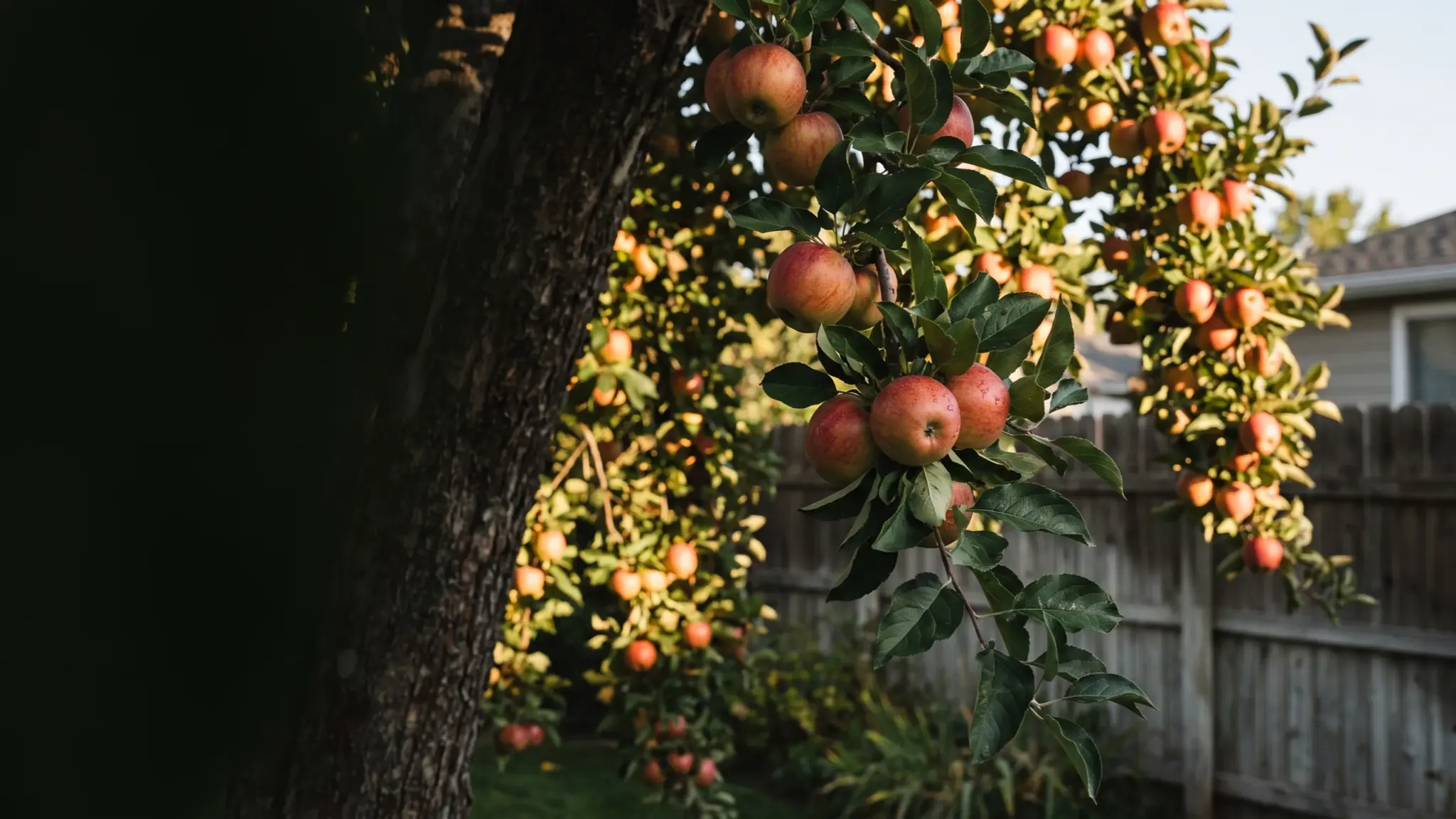
Fruit tree care
If you want fruit you can actually eat, most of the work happens months before there’s any fruit on the tree.
 ISA Certified Arborists
20,000+ customers since 1985
Free on-site inspection, usually within 3-5 business days · Everything labeled for edible fruit · We tell you the pre-harvest interval before we spray
Worm-free apples, every year since.
“They started taking care of my apple and apricot trees some years back. I now have large, beautiful and worm free apples every year.”
Chuck Wyland
“Great service! Restored health to a sick tree I thought for sure was a goner.”
Nathan Brock
Wormy fruit is a timing problem
Almost everyone who calls us about fruit trees calls in August, holding an apple with a worm in it. The honest answer is that August is too late for this year’s crop, but it’s exactly the right time to fix next year’s.
Codling moth is the one in your apples and pears. The adult is a moth; the “worm” is its larva, and it tunnels to the core within a day or so of hatching. Once it’s inside, nothing reaches it. Control means being on the fruit surface during the short window between hatch and entry, and there are two or three generations in a season, so it’s a sequence, not a single spray.
Cherry fruit fly does the same job on cherries, timed to when the fruit starts to color.
Both are beatable. Neither is beatable with one visit in late summer.
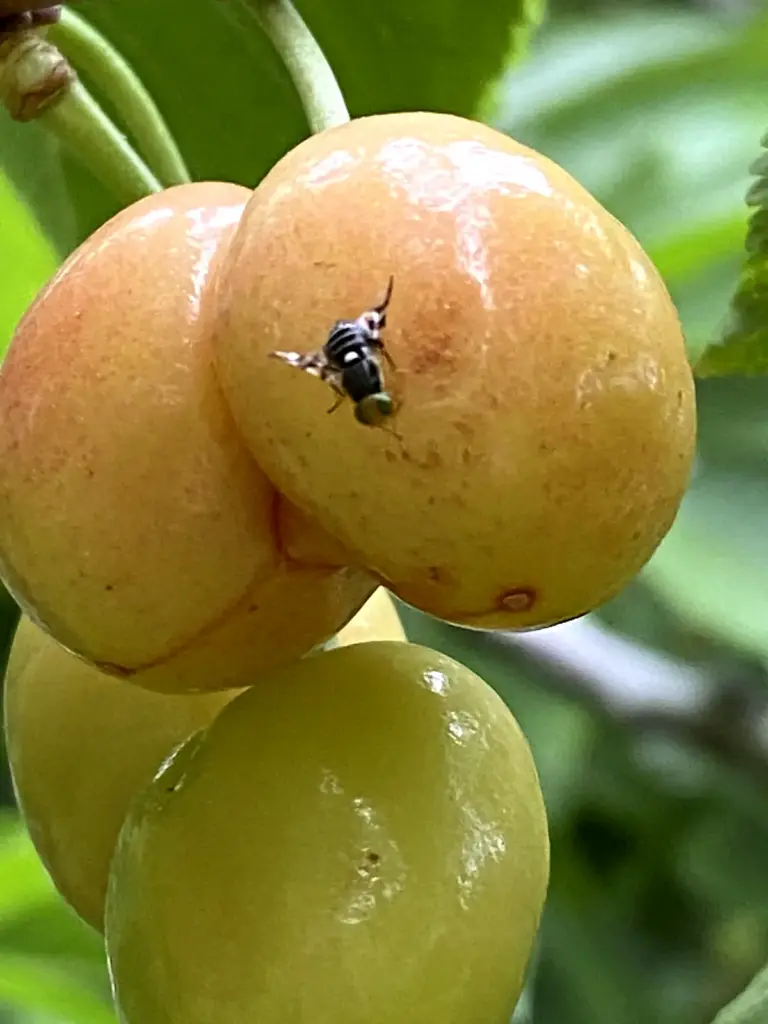
Cherry fruit fly damage inside the fruit
August is too late for this year’s apples. It’s the right time for next year’s.
Get on the spray calendar now and we’ll be there at dormant, bud swell, bloom and petal fall, which is where wormy fruit is actually decided.
Three of the four diseases we treat most go for the fruit itself
Four of the diseases we treat most often are on fruit trees, and three of them go for the fruit itself.
- Coryneum blight, also called shot hole: neat circular holes in the leaves of apricot, peach, nectarine and cherry, and spotting on the fruit
- Scab: brown-black spots on the leaves and fruit of apple, crabapple and pear
- Powdery mildew: white growth on apple and crabapple that wipes off the surface
- Fireblight: the serious one. It infects through the blossom and kills flowering pear, apple, crabapple and mountain ash outright
Every one of these is treated on the tree’s calendar rather than yours: dormant, bud swell, bloom, petal fall.
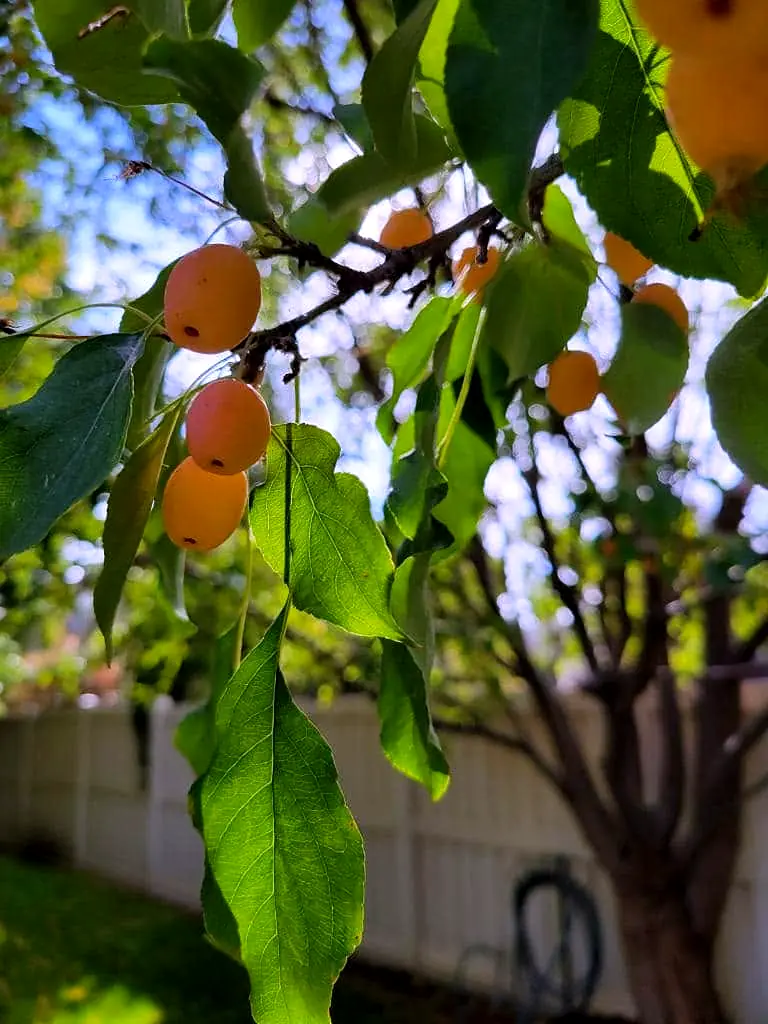
Coryneum blight: shot holes in a peach leaf (illustration)

Fireblight on a flowering pear
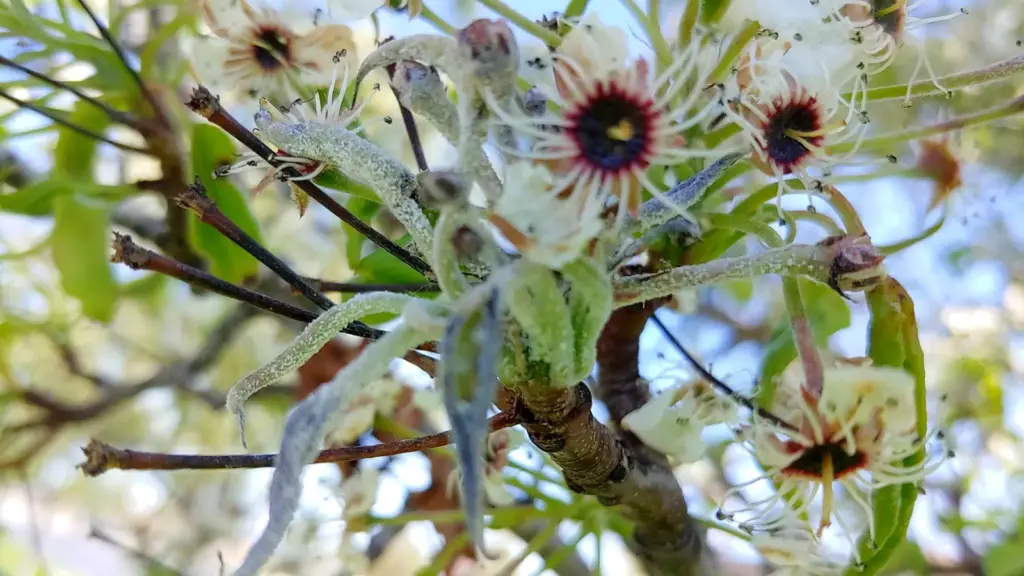
Powdery mildew on foliage
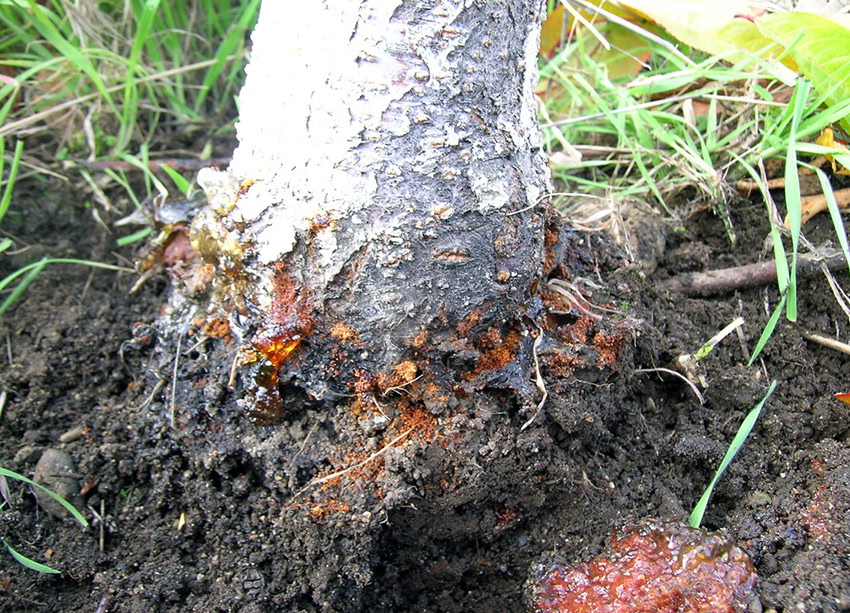
Oozing sap at the base of a trunk: the borer diagnosis
Borers are what usually ends a peach tree
Greater Peachtree Borer goes for peach and nectarine at the base of the trunk; cherry shot hole borer for cherries and other stone fruit. Sap and sawdust at the soil line is the diagnosis most of the time.
Stone fruit is short-lived in this climate to begin with, and a borer infestation is often what ends it. Of everything on this page, this is the one most worth treating before you have a problem.
Seven windows in a fruit tree year, each doing a different job
Roughly, and subject to the year the weather gives us.
- Dormant, late fall and early spring: dormant oil for overwintering eggs, scale and mites. With the leaves off, structural problems are easiest to see
- Bud swell to green tip: first fungicide, for coryneum blight and scab
- Bloom: the fireblight window. Nothing goes on during bloom that would harm the pollinators you need
- Petal fall: scab and mildew rounds continue
- Late spring into summer: codling moth generations, cherry fruit fly as the fruit colors, borer treatments
- After leaf drop: dormant oil again, cleanup, and prune out any fireblight
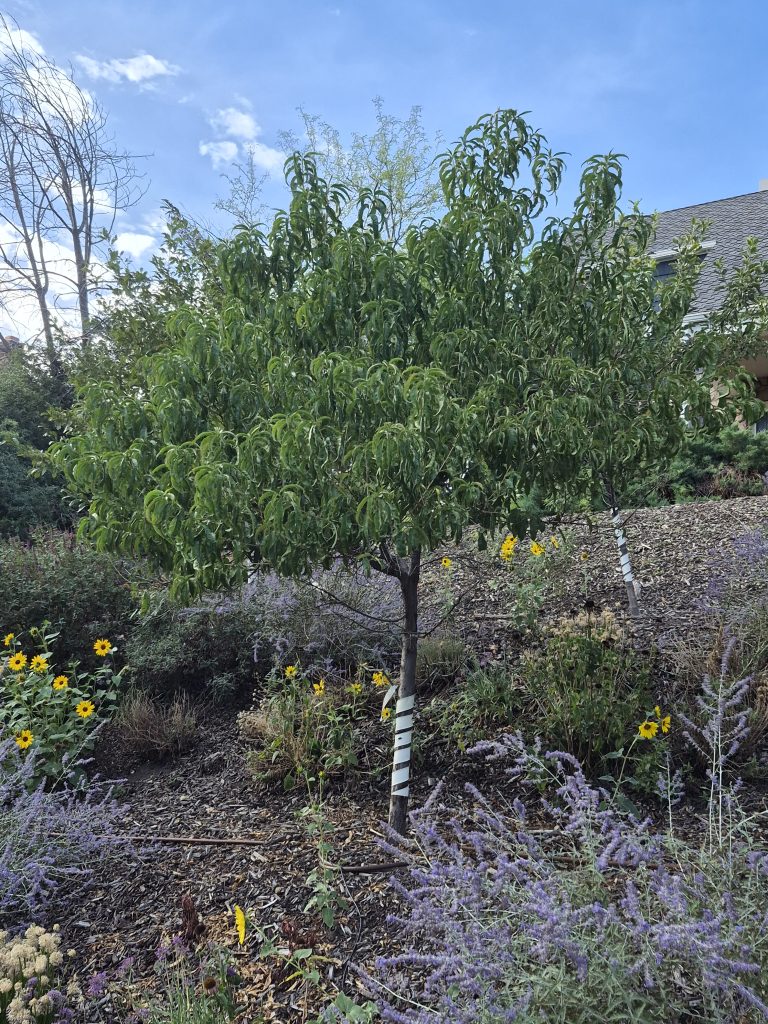
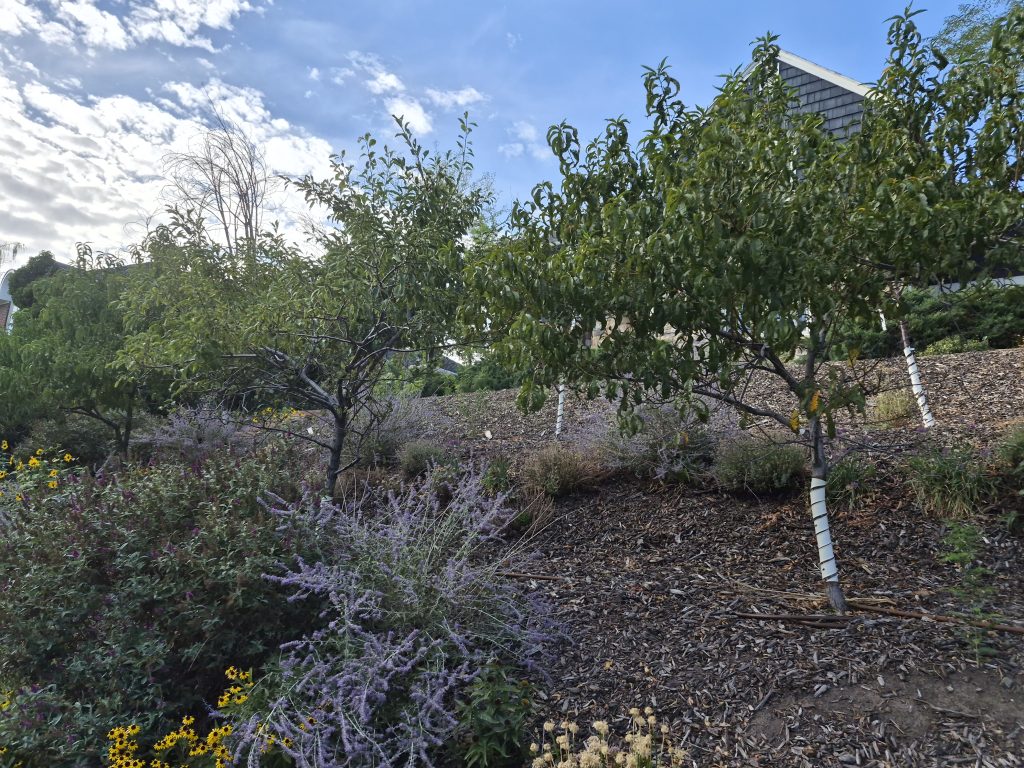
About spraying a tree you’re going to eat from
It’s a fair question, and we get it often.
Everything we put on a fruit tree is labeled for edible fruit and applied at label rate, and every product has a pre-harvest interval, the number of days that have to pass between treatment and picking. We work to it, and we’ll tell you what it is before we spray.
If you’d rather we skipped something in a given year, that’s a conversation, not a problem.
Four steps from wormy fruit to a crop you can actually eat.
1
Free inspection
A certified arborist walks the property and works out what’s actually wrong. No charge, and no obligation.
2
It goes in writing
You get the diagnosis and the price before anything is treated, so there are no surprises on the invoice.
3
Treated in its season
We come back in the window that works on your tree, which is rarely the week you happened to call.
4
We check it
We look at how the tree responded and tell you what it needs next year, or that it needs nothing.
The questions we get asked before we start.
Is fruit from a sprayed tree safe to eat?
Everything we put on a fruit tree is labeled for edible fruit and applied at label rate. Every product has a pre-harvest interval, the number of days between treatment and picking, and we work to it and tell you what it is before we spray.
Do you spray during bloom?
Nothing goes on during bloom that would harm the pollinators you need for a crop. Bloom is the fireblight window, and what happens then is timed around the bees rather than through them.
I called in August about worms in the apples. What now?
August is too late for this year’s fruit and exactly the right time for next year’s. Codling moth is beaten in the short window between hatch and entry, two or three times a season, starting in spring.
Can you leave something out?
Yes. A good part of the program isn’t a pesticide at all, dormant oil works physically and leaves no active residue. If you’d rather we skipped something in a given year, that’s a conversation, not a problem. See also pet and pesticide safety.


Get on next year’s spray calendar.
A certified arborist will come to your property, diagnose what’s wrong, and write up an estimate. Serving Salt Lake County, Davis County, Utah County and Park City.
- Free on-site inspection and a written estimate. No obligation.
- We’re usually out within 3-5 business days.
- ISA Certified Arborists. Licensed and insured pesticide applicators.
- Family-run in Salt Lake City since 1985.
- If your tree doesn’t need treatment, we’ll tell you that.
- Someone answers the phone, Monday to Friday, 8:00 am to 5:00 pm.