
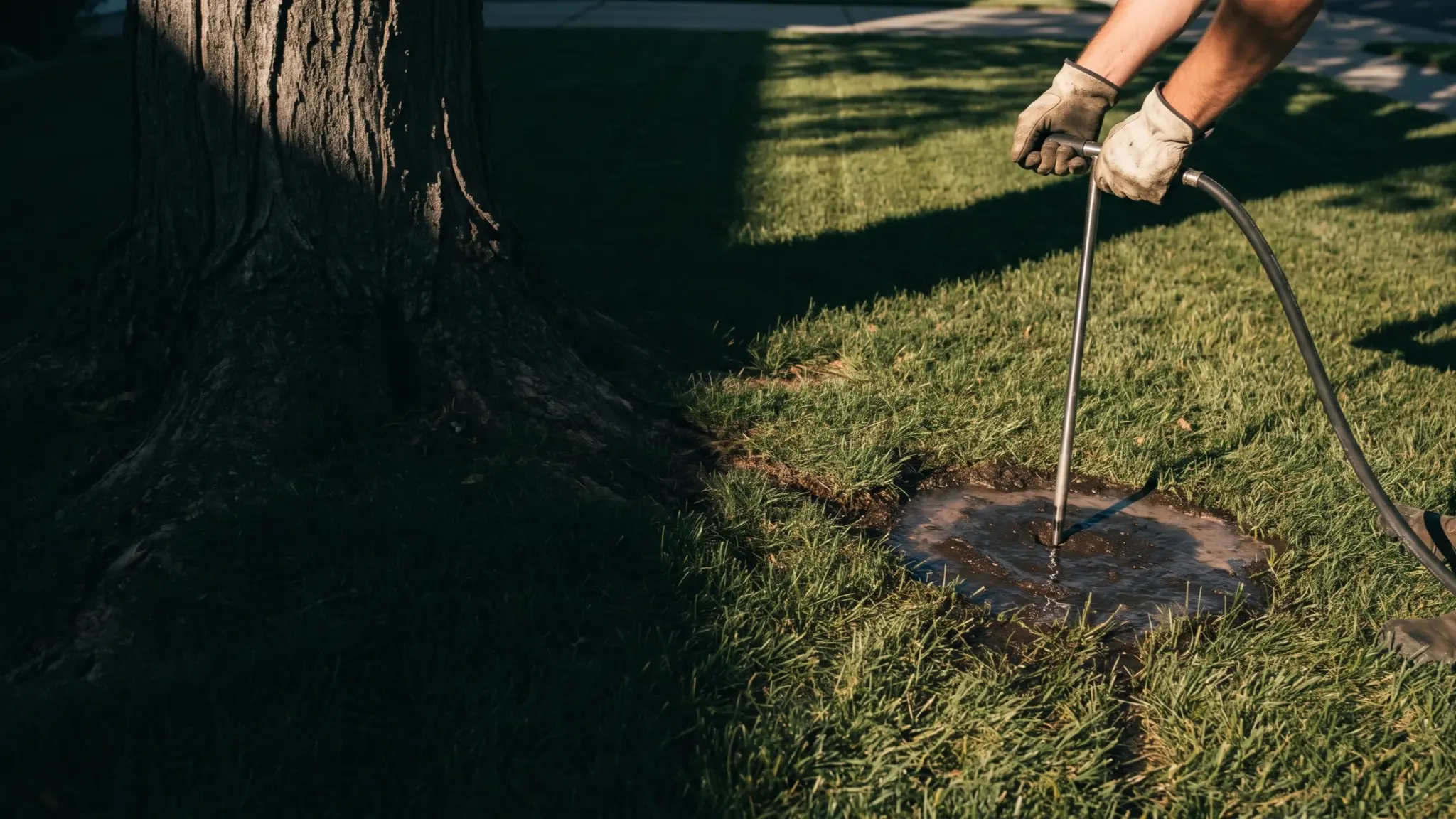
Tree fertilization & soil health
In full sun, a healthy lawn has twenty to four hundred times more root length than the woody plants growing around and in it. This causes competition between your lawn, trees, and shrubs
 ISA Certified Arborists
20,000+ customers since 1985
Free on-site inspection, usually within 3-5 business days · If the fix is cultural and costs nothing, we’ll say so · No pressure
Twenty years old, and it has never looked better.
“Outstanding Service! My Sunset Maple has never looked so good in 20 years! Thank you for saving my tree!”
Ken Abel
“Thank you for saving my very old trees (black locust and horse chestnut), which have never looked so good in the thirty years I’ve lived with them.”
Sid Harper
Your lawn has up to 400 times more root length. It eats first.
A tree planted in a lawn is in a competition it’s structurally unequipped to win. Turf has vastly more root length packed into the top few inches of soil, and it gets to the water and nutrients first. Feeding the tree directly relieves that pressure.
The most persistent myth in this business is that fertilizing the lawn also fertilizes the tree. Research says otherwise: turf absorbs most of a water-soluble nitrogen application within about 48 hours. On a thin lawn some of it will reach the tree. Under a thick, well-fed lawn, very little does.
A properly fed tree puts on better growth and better color. And the part people actually care about: a vigorous tree resists insects and disease far better than a struggling one. Most borer problems we see started as a stress problem.
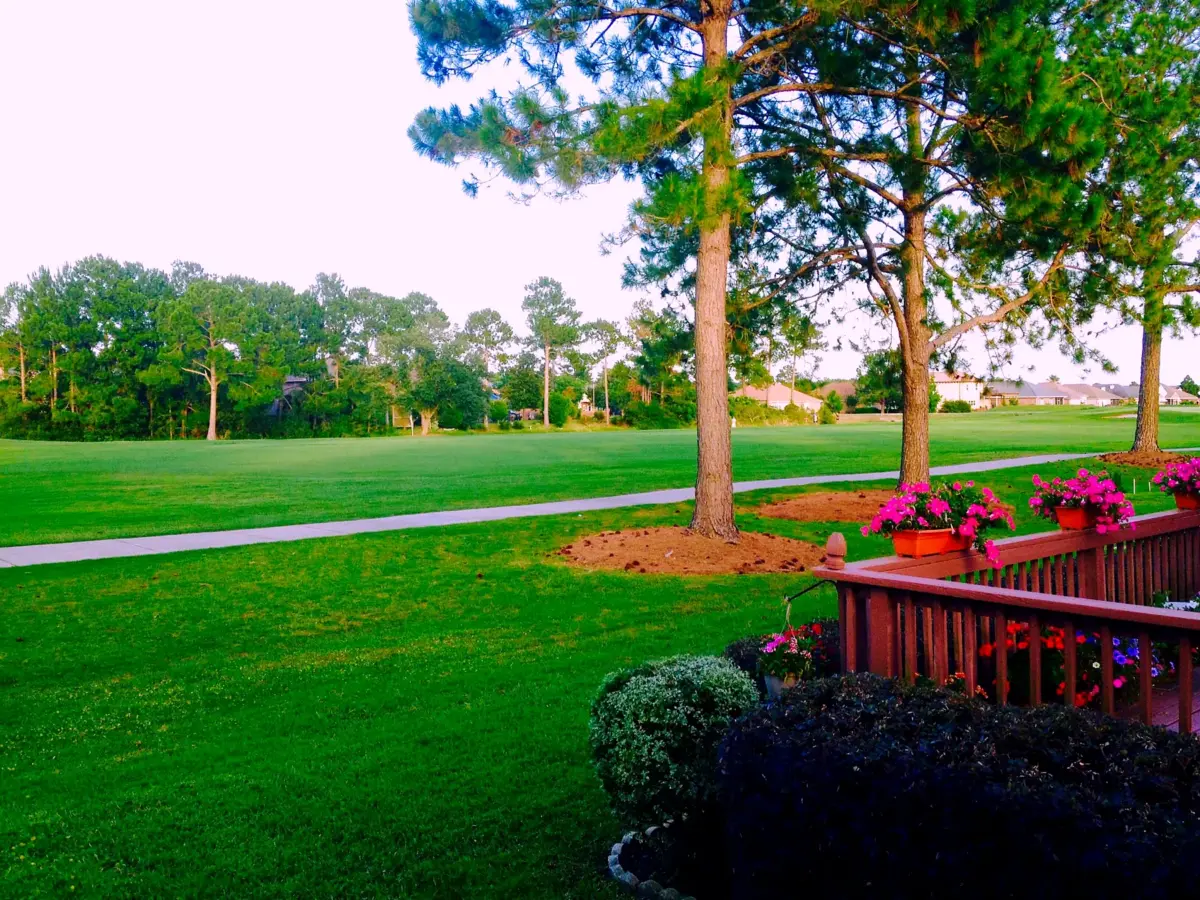
Feeding the lawn isn’t feeding the tree.
Turf absorbs most of a water-soluble nitrogen application within about 48 hours. A free inspection tells you what your soil is actually short of, and whether feeding is even the answer.
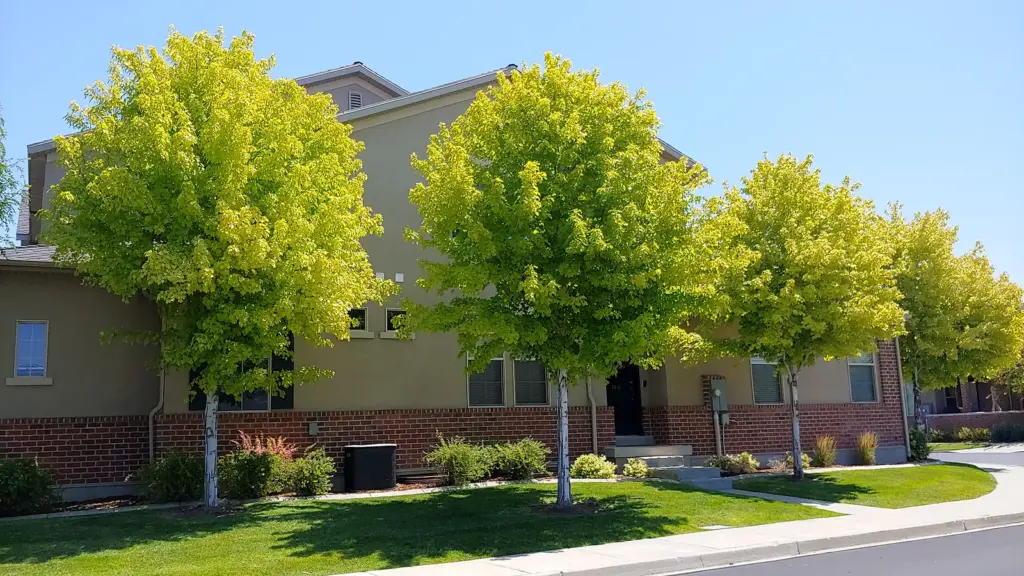
Iron chlorosis: the yellowing our alkaline soil causes
Utah soil is short of nitrogen, and it locks up the iron
Nitrogen is the one Utah soils are usually short of. Broad deficiencies in the other macronutrients are uncommon here.
Micronutrients are a different story, and they’re chemistry rather than scarcity. Our alkaline soil locks iron and manganese up where roots can’t reach them. That has its own page, because it has its own treatment.
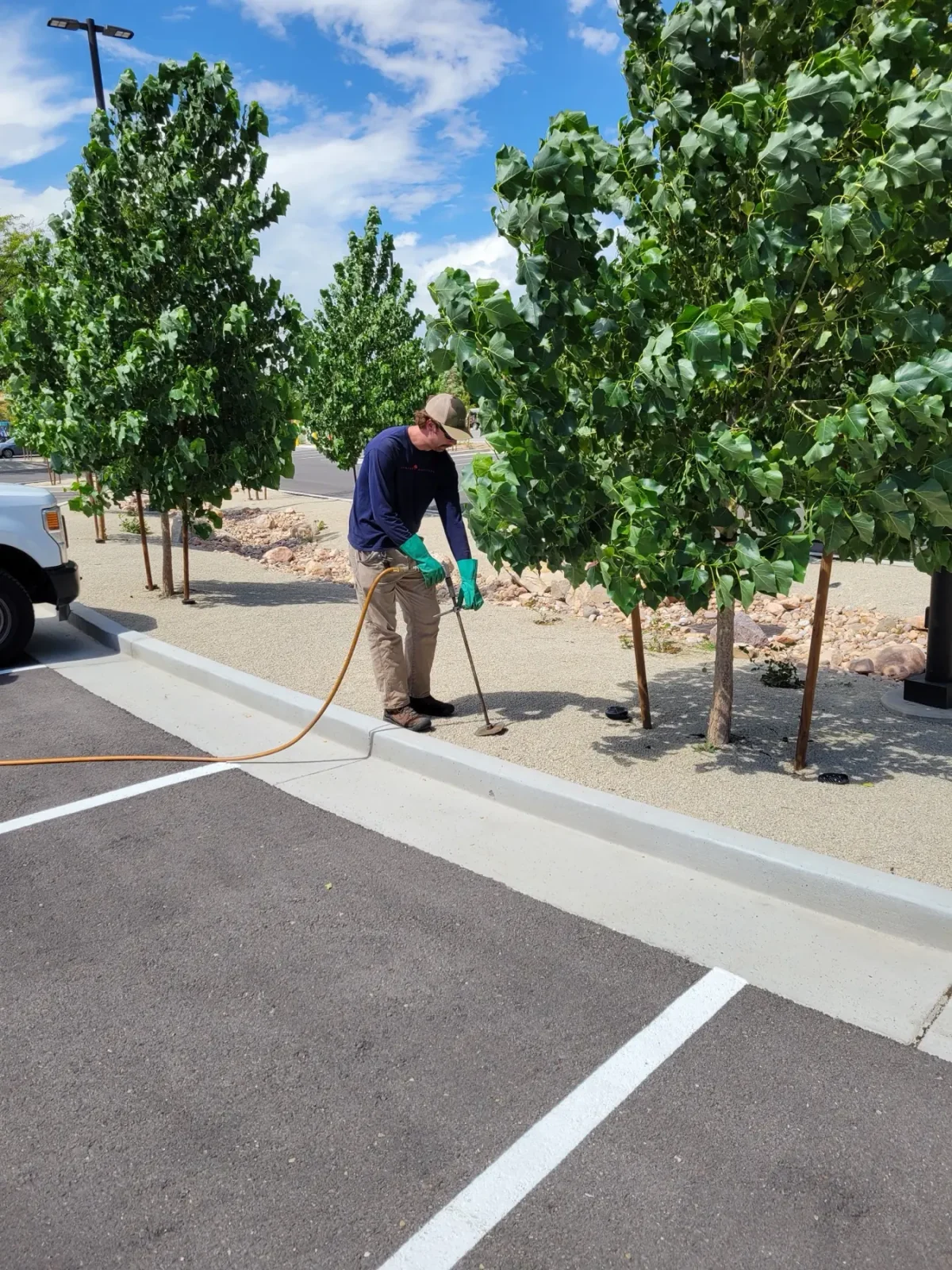
A soil drench across the whole root zone, not a circle round the trunk
We use a soil drench, distributing liquid fertilizer evenly across the root zone so the shallow and the deeper roots both get fed. It’s time released over a season rather than delivered all at once.
Coverage matters more than people expect. A tree’s absorbing roots aren’t clustered at the trunk. They extend outward past the edge of the canopy, so treating a small circle around the base misses most of them. Timing matters too: early spring, several weeks before bud break, or late fall once the leaves are down and the soil is still above 40°F. We avoid late summer feeding, because pushing new growth that late can leave a tree less prepared for winter.
Mycorrhizae: fungi that extend the roots your tree built
Mycorrhizae is a partnership rather than a product. Certain fungi colonize the fine roots of certain plants and effectively extend the root system, reaching water and nutrients the roots alone couldn’t. The plant pays in sugars. Both sides come out ahead, and the tree ends up with a considerably larger absorbing surface than it built itself.

Sometimes the fix costs nothing, and we’ll say so
Fertilizer isn’t a cure. A tree declining from planting depth, girdling roots, compacted soil or a mower wound will go right on declining on a full stomach, and pushing new growth onto a tree that can’t support it makes things worse rather than better.
When that’s what we find, the recommendation is a cultural fix: how you water, what’s piled against the trunk, what’s growing where. Some of those don’t cost anything, and we’ll say so.
Four steps to a tree that isn’t losing to the lawn.
1
Free inspection
A certified arborist walks the property and works out what’s actually wrong. No charge, and no obligation.
2
It goes in writing
You get the diagnosis and the price before anything is treated, so there are no surprises on the invoice.
3
Treated in its season
We come back in the window that works on your tree, which is rarely the week you happened to call.
4
We check it
We look at how the tree responded and tell you what it needs next year, or that it needs nothing.
The questions we get asked before we start.
I already fertilize the lawn. Isn’t that enough?
Research says no. Turf absorbs most of a water-soluble nitrogen application within about 48 hours. On a thin lawn some of it reaches the tree; under a thick, well-fed lawn, very little does.
When is the right time to feed a tree?
Early spring, several weeks before bud break, or late fall once the leaves are down and the soil is still above 40 degrees. We avoid late summer, because pushing new growth that late leaves a tree less prepared for winter.
Will feeding save a tree that’s declining?
Not on its own. A tree declining from planting depth, girdling roots, compacted soil or a mower wound will go right on declining on a full stomach. When that’s what we find, the recommendation is a cultural fix, and some of those cost nothing.
My leaves are yellow. Is that a nutrient problem?
Often it’s chemistry rather than scarcity. Our alkaline soil locks iron and manganese up where roots can’t reach them, which has its own treatment. See iron and chlorosis treatment.


Feed the tree, not the lawn.
A certified arborist will come to your property, diagnose what’s wrong, and write up an estimate. Serving Salt Lake County, Davis County, Utah County and Park City.
- Free on-site inspection and a written estimate. No obligation.
- We’re usually out within 3-5 business days.
- ISA Certified Arborists. Licensed and insured pesticide applicators.
- Family-run in Salt Lake City since 1985.
- If your tree doesn’t need treatment, we’ll tell you that.
- Someone answers the phone, Monday to Friday, 8:00 am to 5:00 pm.